What Matters in On-Policy Reinforcement Learning?
A Large-Scale Empirical Study
or
PPO: The Algorithm, the Myth, the Legend
Google Brain Team, ICLR 2021
Presented by Professor Zachary Sunberg, August 26th, 2025
AI used to confirm connections between ideas, create images
Motivation
- It's 2021
- DRL is a powerful tool
- PPO most popular algorithm
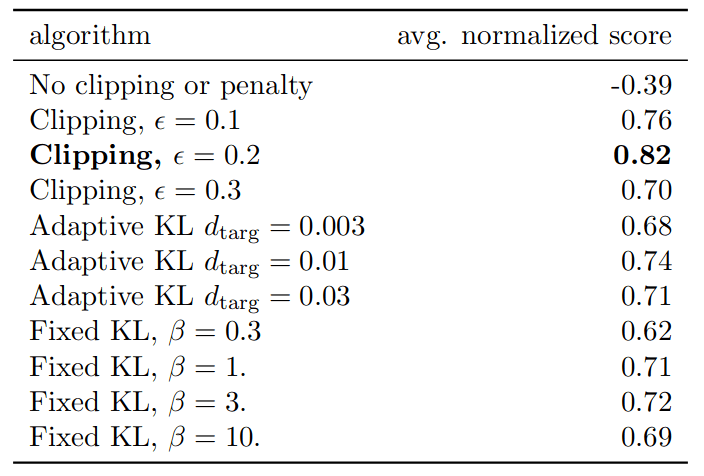
- Original PPO paper claimed clipped surrogate objective responsible for its performance
- Other research had raised questions: How much of PPO's performance is due to
- Clipped surrogate objective
- Implementation details
- Motivating Question: What matters in on-policy RL?
- Possible Tools:
- Theory: None available to answer these questions
- Numerical Experiments: scale challenge (thankfully, this is Google that we're talking about)
Contributions
- Investigated 68 choices by implementing all in a unified framework and testing on Mujoco "robotics" tasks
- Trained 250,000 agents with heuristically-guided sampling of choice values and offered recommendations
- Tons of results, including Mega Appendix: Figures 3-92
- "Most surprising finding": network initialization matters!
Background Paper: PPO
John Schulman, Filip Wolski, Prafulla Dhariwal, Alec Radford, Oleg Klimov; 2017
https://arxiv.org/pdf/1707.06347 (Not Peer Reviewed!)



Advantage \(A_t = Q(s_t, a_t) - V(s_t)\)

CPI = "Conservative Policy Iteration"
Problem: Can produce large update
=> only one step before collecting new data
(TRPO solved this with KL constraint/penalty)

Background Paper: PPO


Value
Entropy
"We don’t share parameters between the policy and value function (so coefficient c1 is irrelevant), and we don’t use an entropy bonus."
Story:
- Easy to implement
- Enables minibatch updates
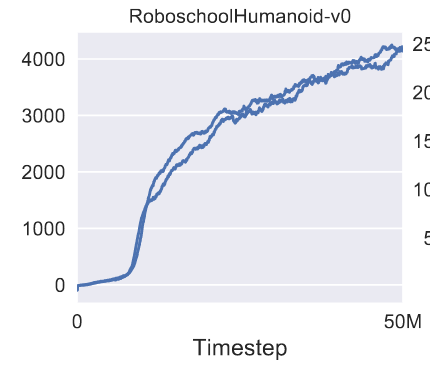
- Superior empirical performance
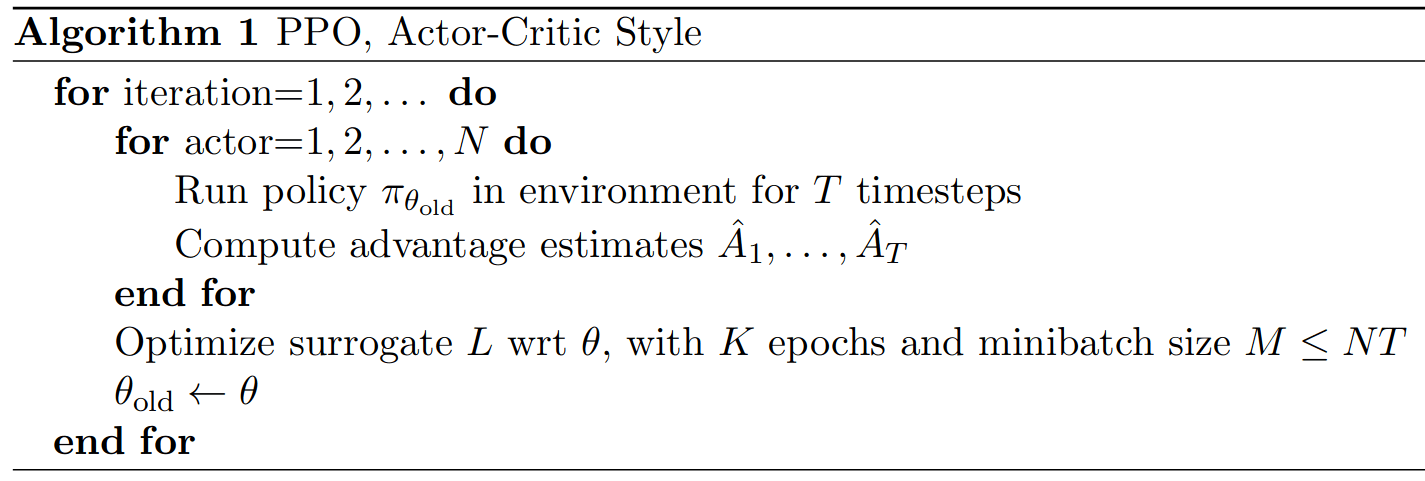
The Algorithm
Background Paper: PPO
Cited 29262 times (as of last night)
Impact
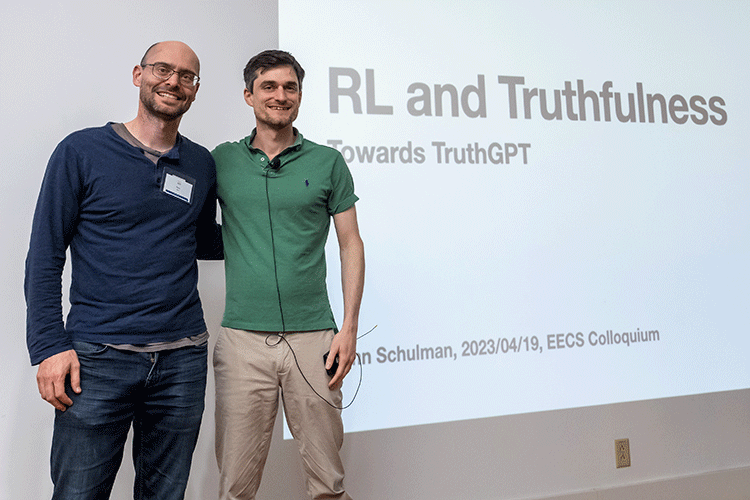
- John Schulman was a co-founder of OpenAI
- InstructGPT (first large-scale RLHF) used PPO to get a GPT model to obey human intent (crucial to get a language model to act as a chatbot)
- ChatGPT is a successor to InstructGPT
(avg ~10x per day)
But...
Background Paper: Impl Matters
Implementation Matters in Deep Policy Gradients: A Case Study on PPO and TRPO
Logan Engstrom, Andrew Ilyas, Shibani Santurkar, Dimitris Tsipras, Firdaus Janoos, Larry Rudolph, and Aleksander Madry; ICLR 2020
Implementation Details
- Value function clipping
- Reward scaling
- Orthogonal initialization and layer scaling
- Adam learning rate annealing
- Reward clipping
- Observation normalization
- Observation clipping
- Hyperbolic tan activations
- Global gradient clipping
"PPO’s marked improvement over TRPO (and even stochastic gradient descent) can be largely attributed to these optimizations."
Background Paper: Impl Matters
Implementation Matters in Deep Policy Gradients: A Case Study on PPO and TRPO
Logan Engstrom, Andrew Ilyas, Shibani Santurkar, Dimitris Tsipras, Firdaus Janoos, Larry Rudolph, and Aleksander Madry; ICLR 2020
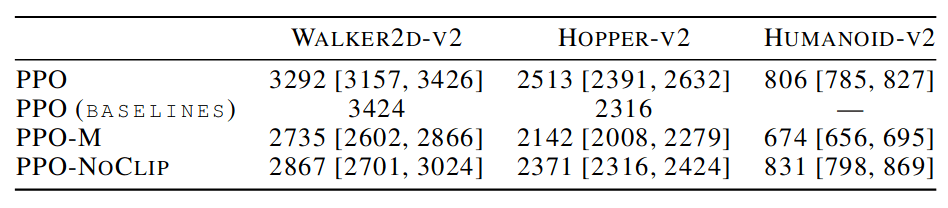
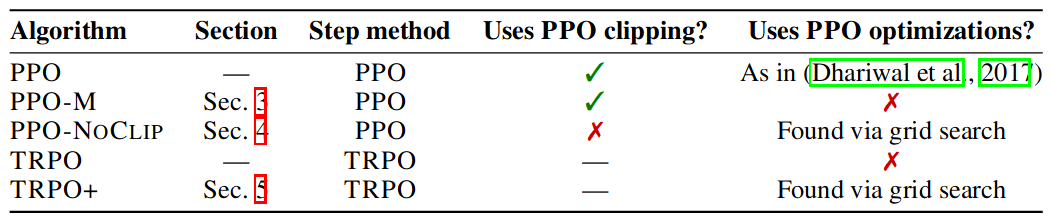
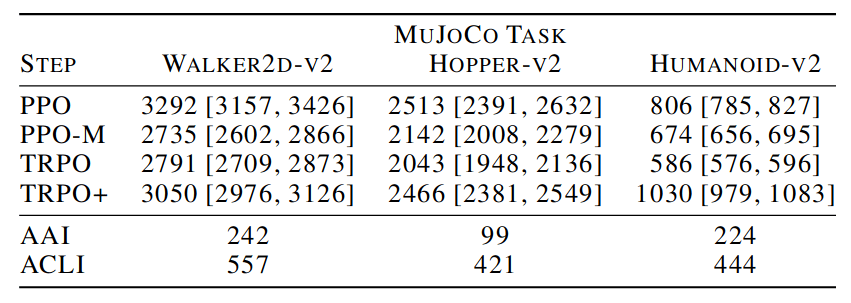

AAI = Average Algorithmic Improvement
ACLI = Average Code Level Improvement
The Myth
Back to "What Matters"
Thematic Groups:
- Policy Losses (PG, PPO, ...)
- Networks Architecture (size, activation function, ...)
- Normalization and clipping (gradient clip, obs norm, ...)
- Advantage Estimation (N-step, GAE, ...)
- Training setup (minibatches, ...)
- Timestep handling (discount, frameskip, ...)
- Optimizers (Adam, RMSProp, ...)
- Regularization (Entropy, KL w.r.t some policy, ...)
Goal: Evaluate which design choices are most effective
Problem Setting
- MDP reinforcement learning
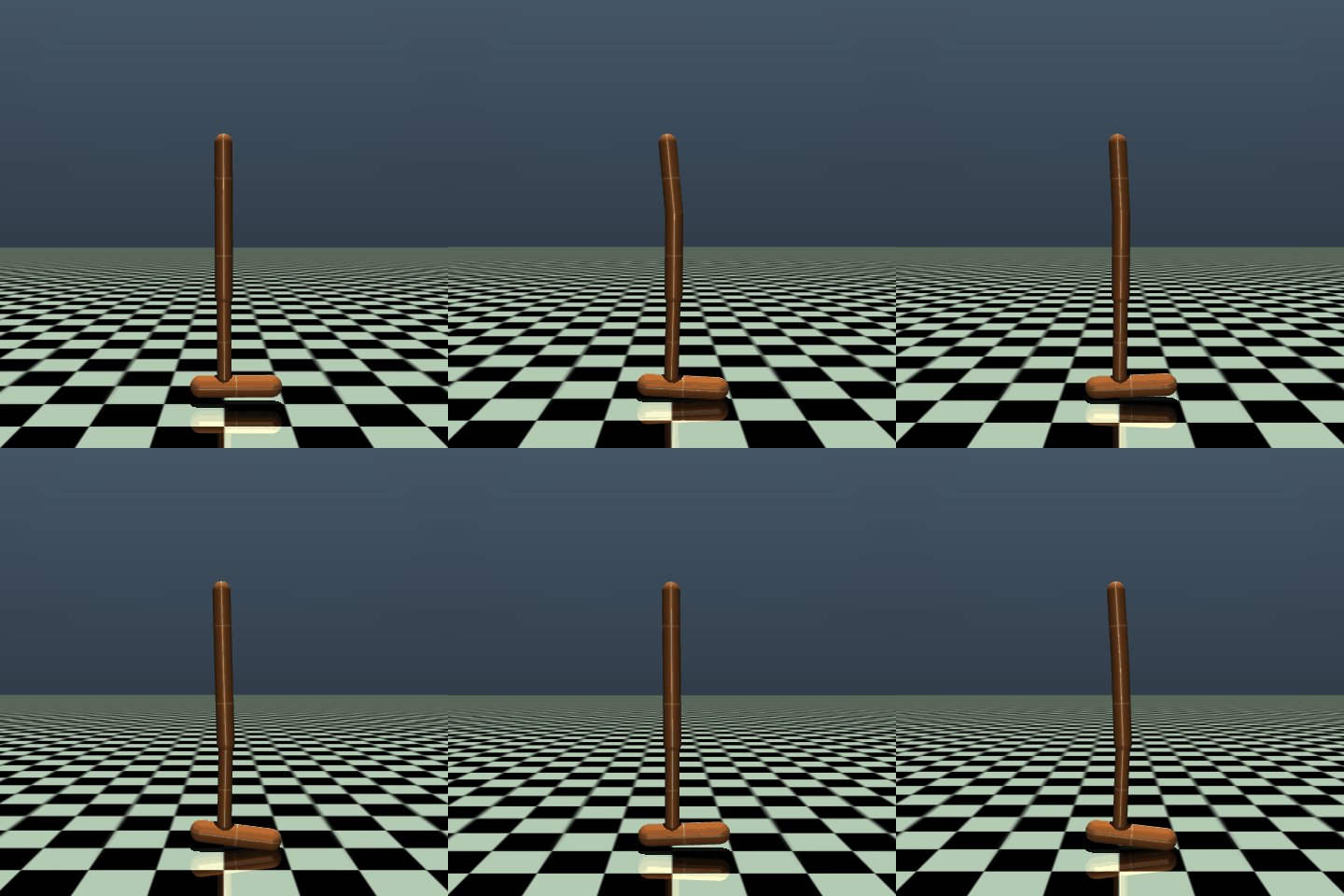
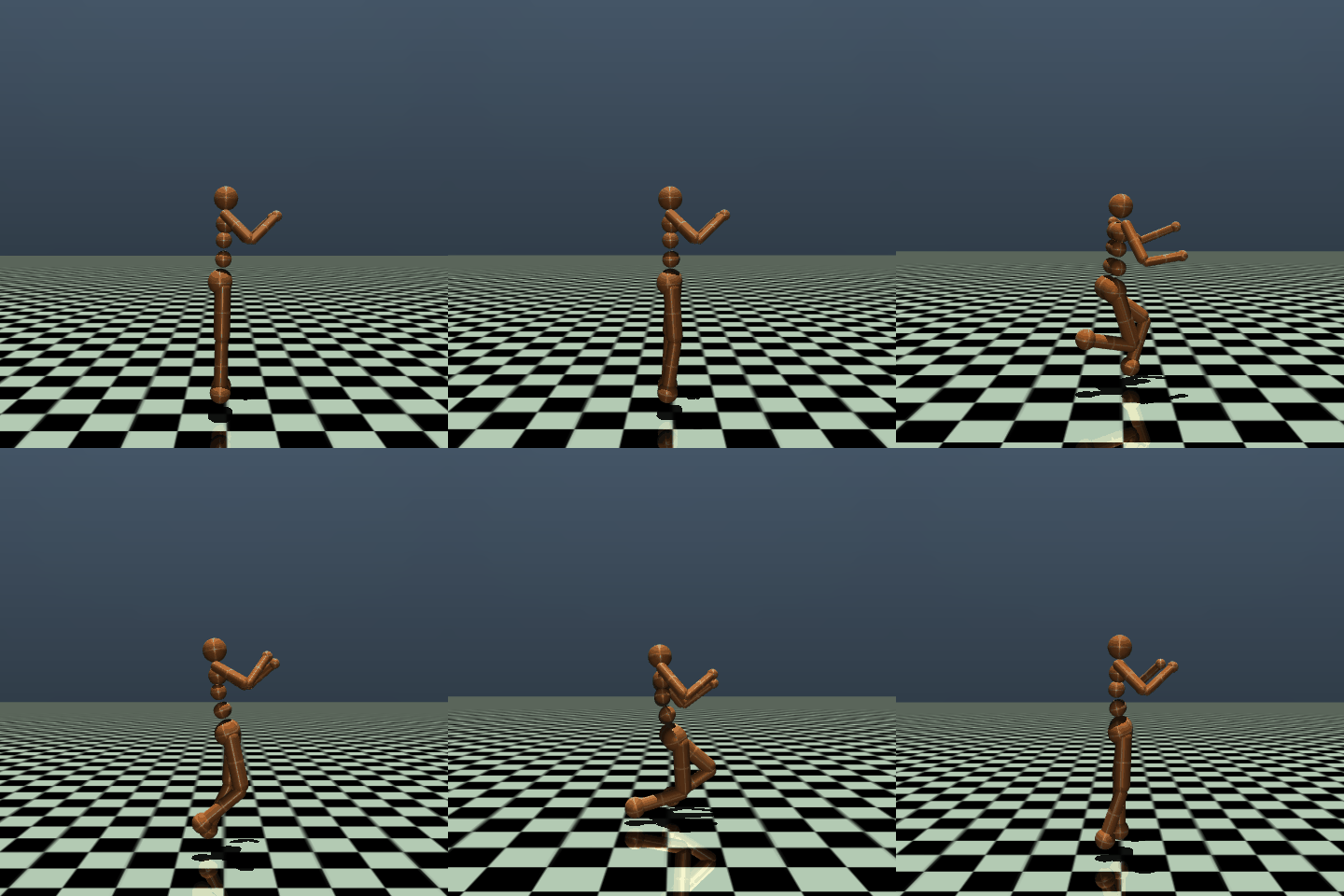
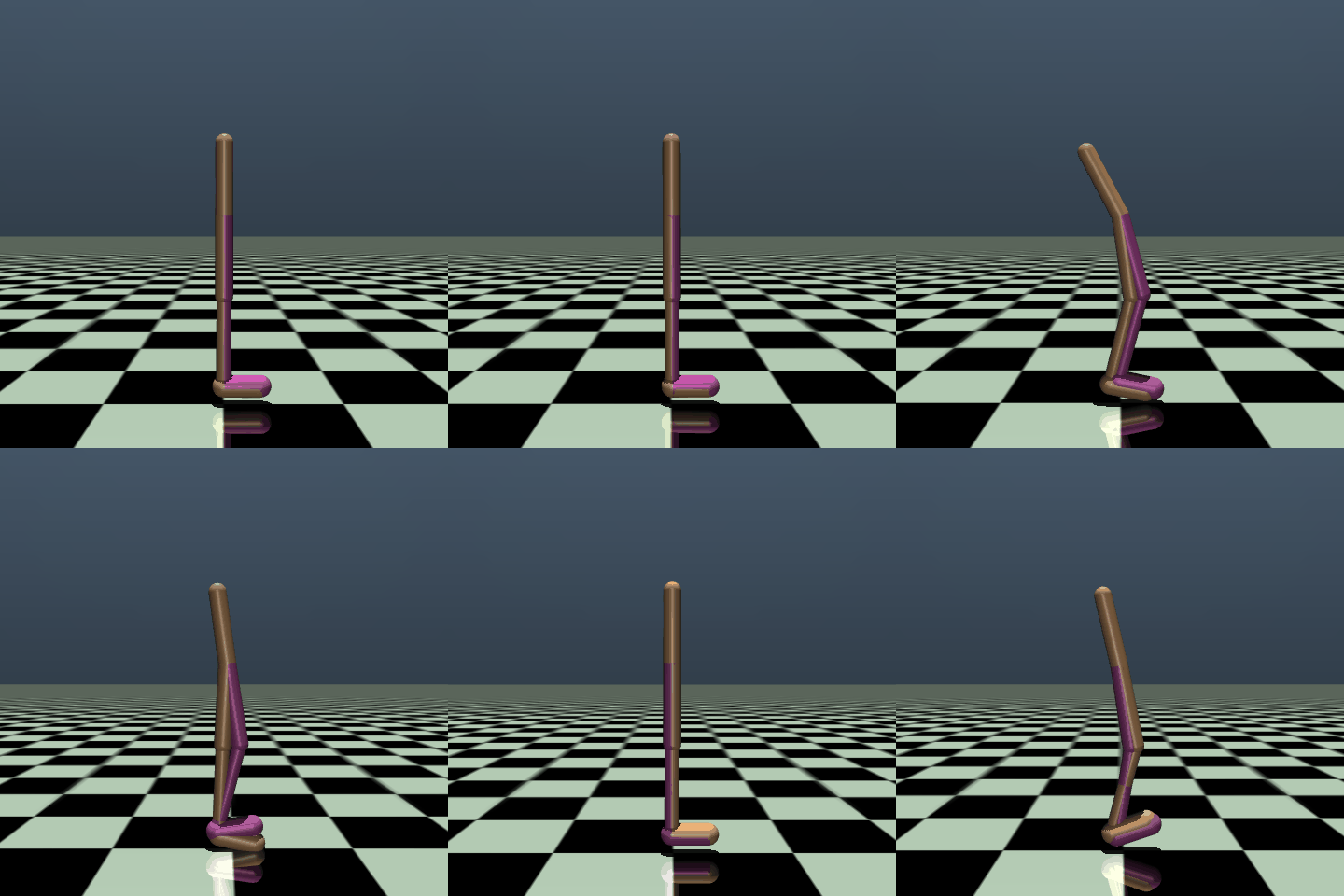
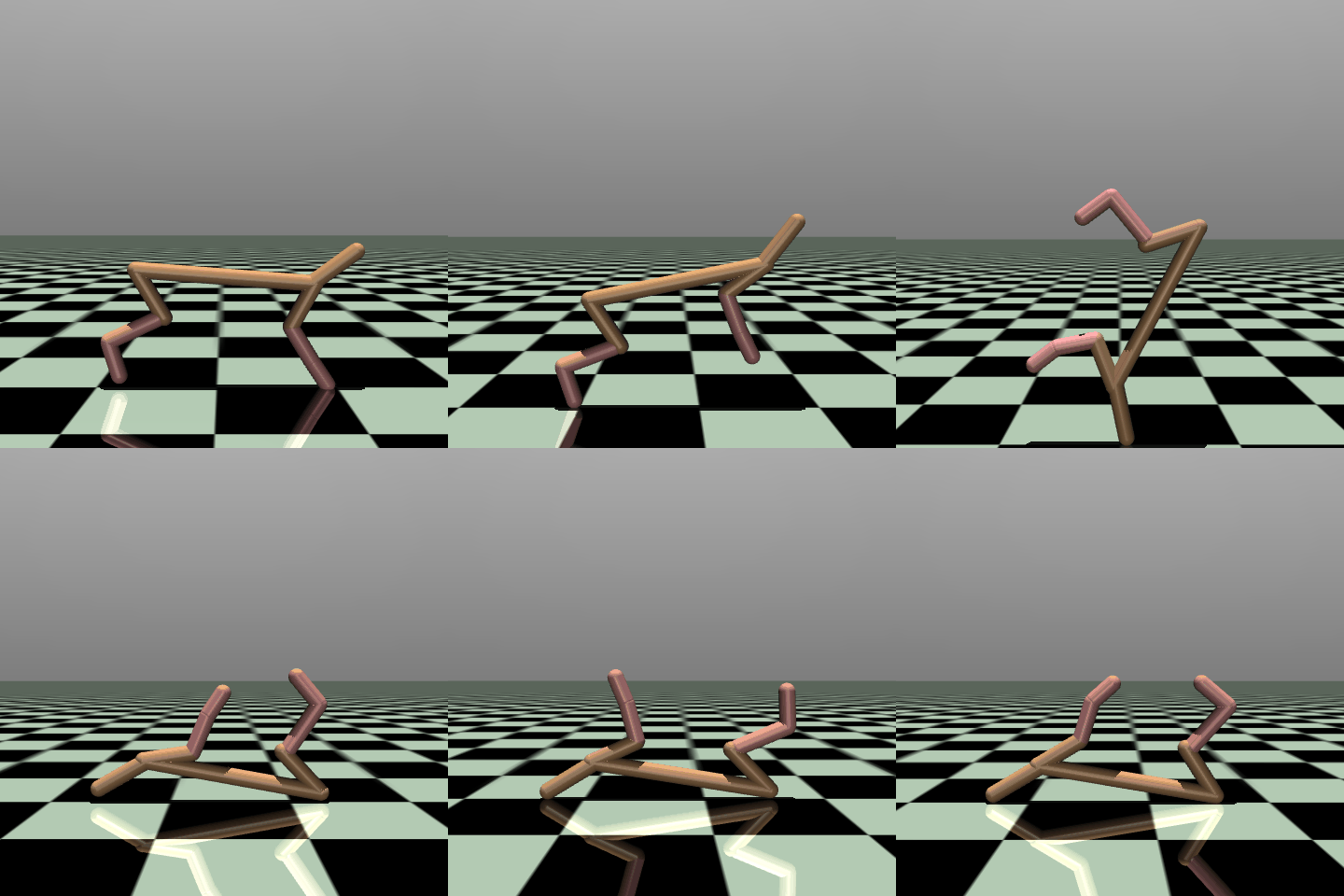
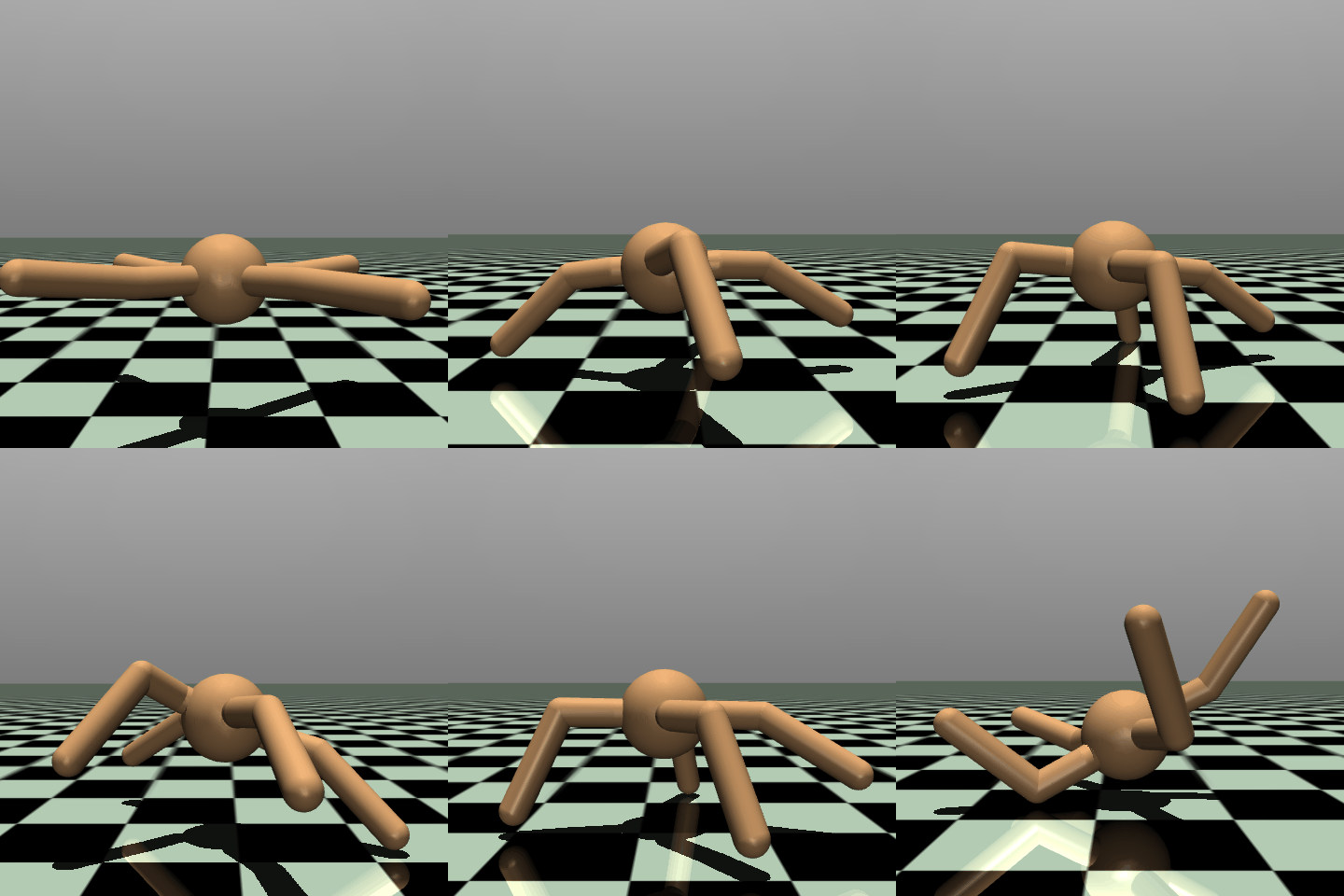
- Continuous control tasks in Mujoco
s, r, done, info = env.step(a)
Methods
68 choices with ~3 values each \(\implies 3^{68} \approx 2.8 \times 10^{32}\) configurations.
~250,000 agents trained
(C24: Learning Rate included in some other groups)
Sample Uniformly for Choices within Group
Baseline
\(\approx\) ppo2
Group: Policy Losses
Group: Regularizers
Group: Optimizers
...
C23: Adam/RMSProp
C24: Learning Rate
C26: Momentum
Methods
Uniform sampling \(\implies\) sometimes bad combination \(\implies\) report 95th percentile
95th percentile
95% confidence interval for 95th percentile
Computational Resources
- Computational resources not reported
- How long would it take on your desktop?
- Claude says about an hour with your GPU
- 250,000 GPU-hours = 28.5 GPU-years
- Probably not feasible for a student to do
Numerical Results
(Very Selected - there are 92 figures)
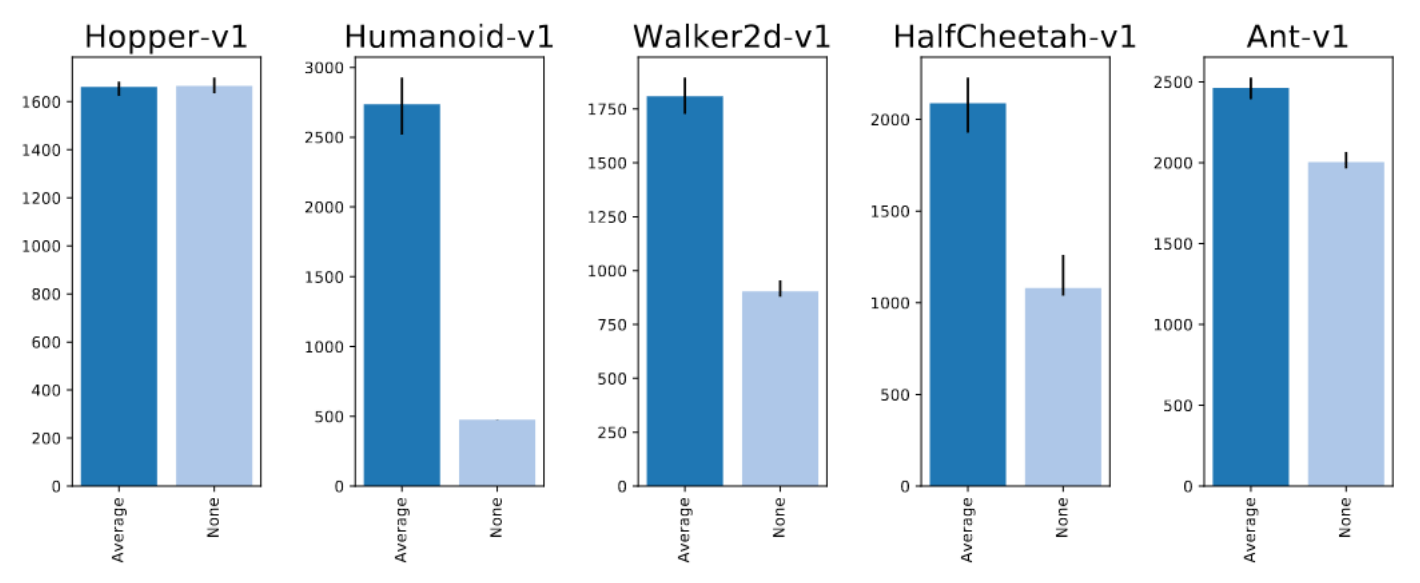
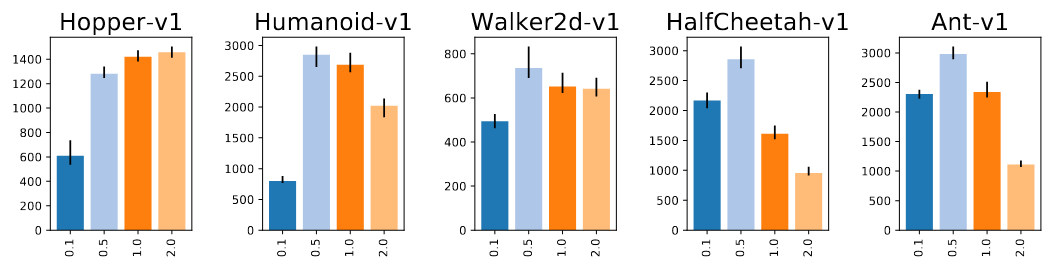
Normalization and Clipping
Observation Normalization
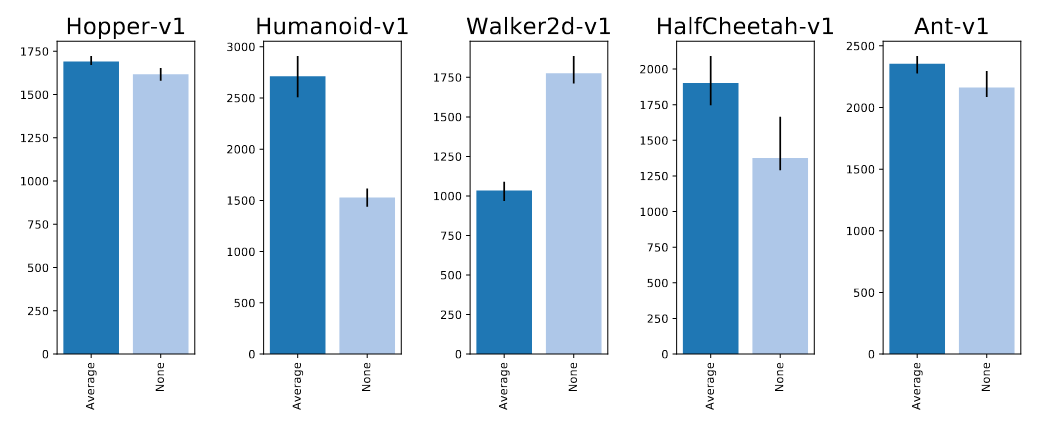
Value Function Normalization

Numerical Results
Networks Architecture
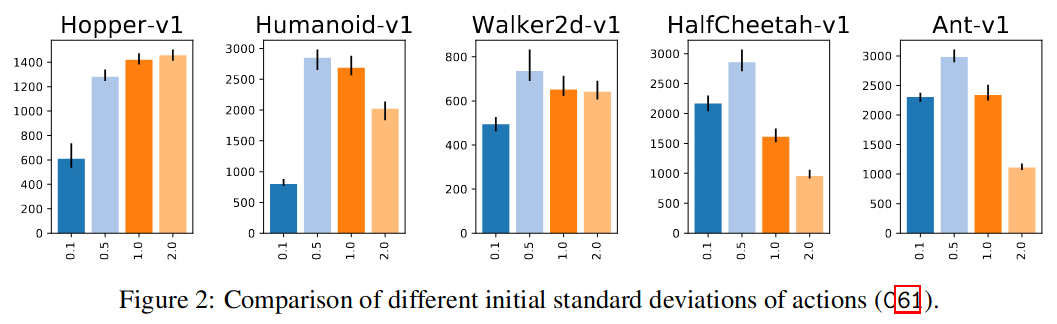


"Most surprising results"
Numerical Results
Policy Losses
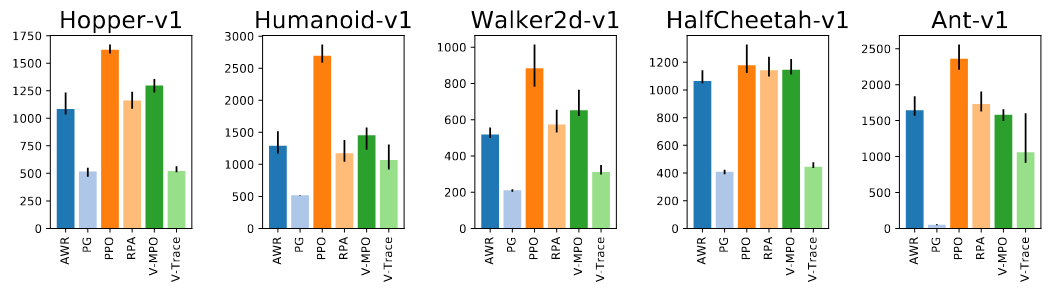

Vindication!
The Legend
Critique
Commendations
- Thorough
- Did not give computational setup
- Not the kind of research we can do - good that Google does it.
- Kudos for managing huge amount of data
Criticisms
- Lack of environment diversity
Impact and Legacy
- Most people who implement an RL algorithm will read this paper.
- Best answer to "Why isn't my PPO working?"
- Cited by ~500
- Dreamer V3
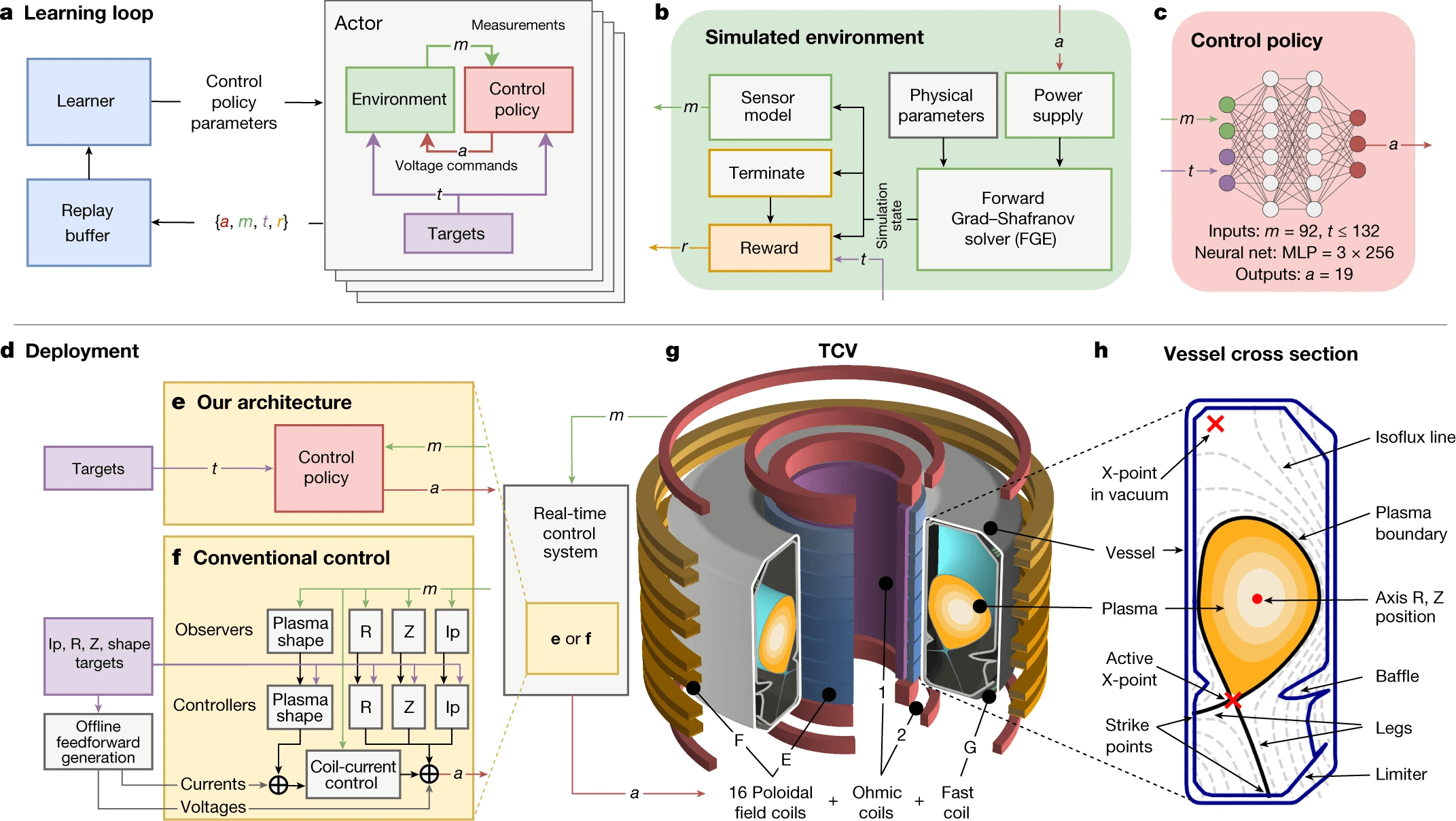
- Magnetic control of tokamak plasmas through deep reinforcement learning
Recommended Reading
The 37 Implementation Details of PPO; 2022 ICLR Blog Track
Huang, Shengyi; Dossa, Rousslan Fernand Julien; Raffin, Antonin; Kanervisto, Anssi; Wang, Weixun
Contributions
- Investigated 68 choices by implementing all in a unified framework and testing on Mujoco "robotics" tasks
- Trained 250,000 agents with heuristically-guided sampling of choice values and offered recommendations
- Tons of results, including Mega Appendix: Figures 3-92
- "Most surprising finding": network initialization matters!
What Matters in On-Policy RL
By Zachary Sunberg