Online POMDP and POSG Planning for Deception and Counter-Deception
Professor Zachary Sunberg
University of Colorado Boulder
DECODE-AI Project Kickoff Meeting
February 26, 2025
Autonomous Decision and Control Laboratory

-
Algorithmic Contributions
- Scalable algorithms for partially observable Markov decision processes (POMDPs)
- Motion planning with safety guarantees
- Game theoretic algorithms
-
Theoretical Contributions
- Particle POMDP approximation bounds
-
Applications
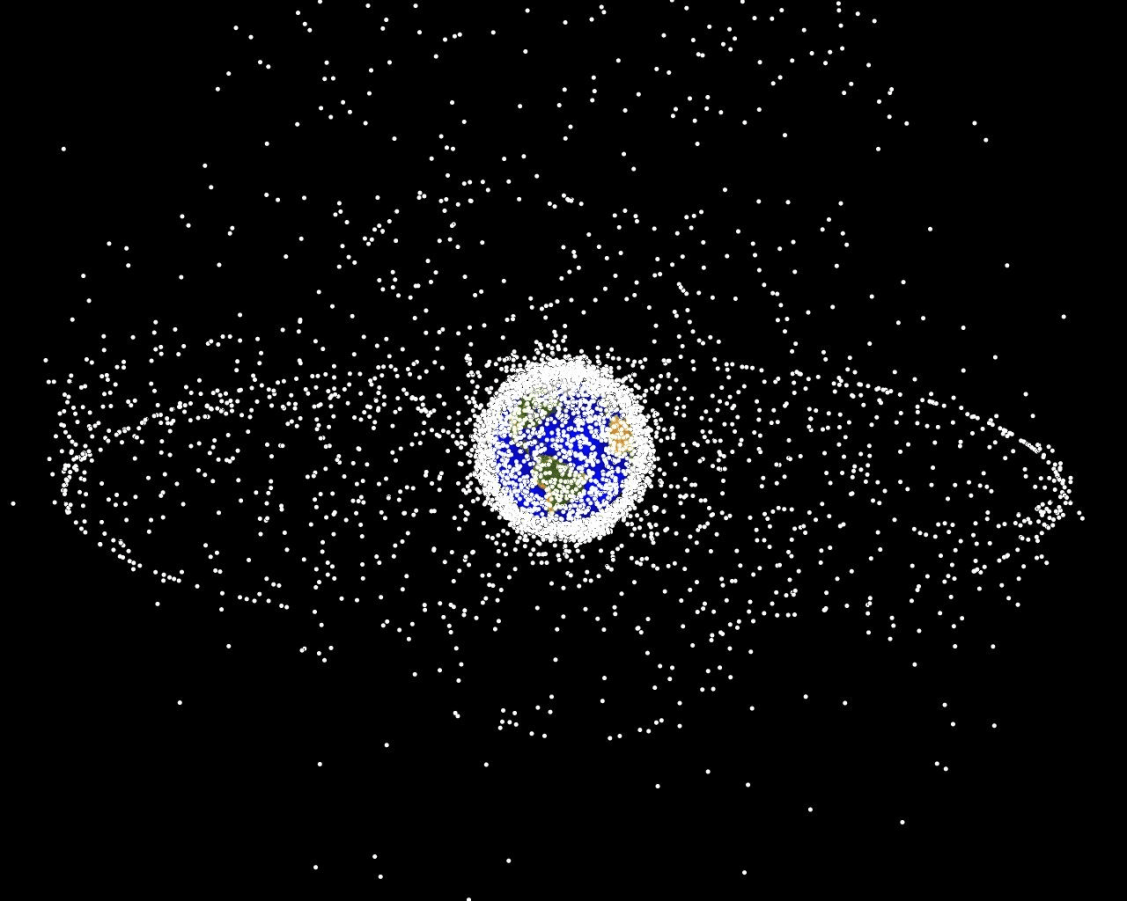
- Space Domain Awareness
- Autonomous Driving
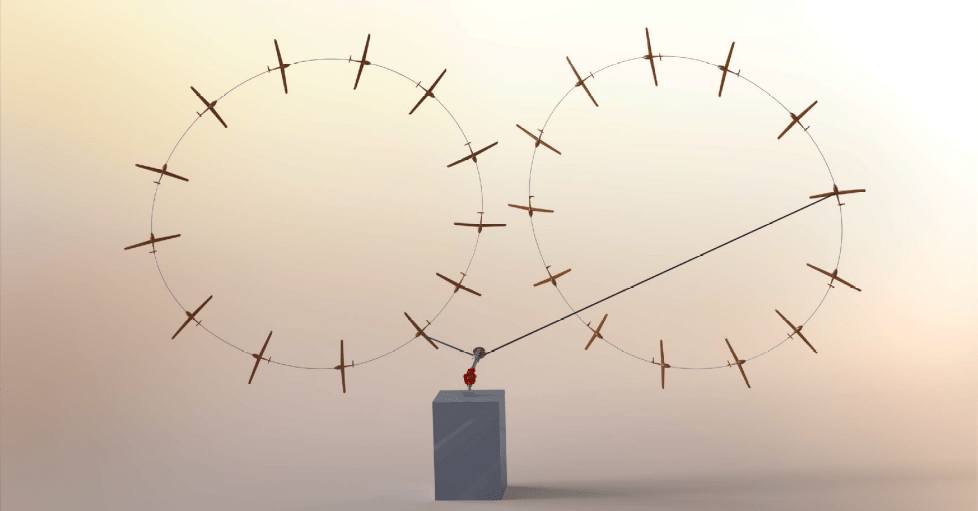
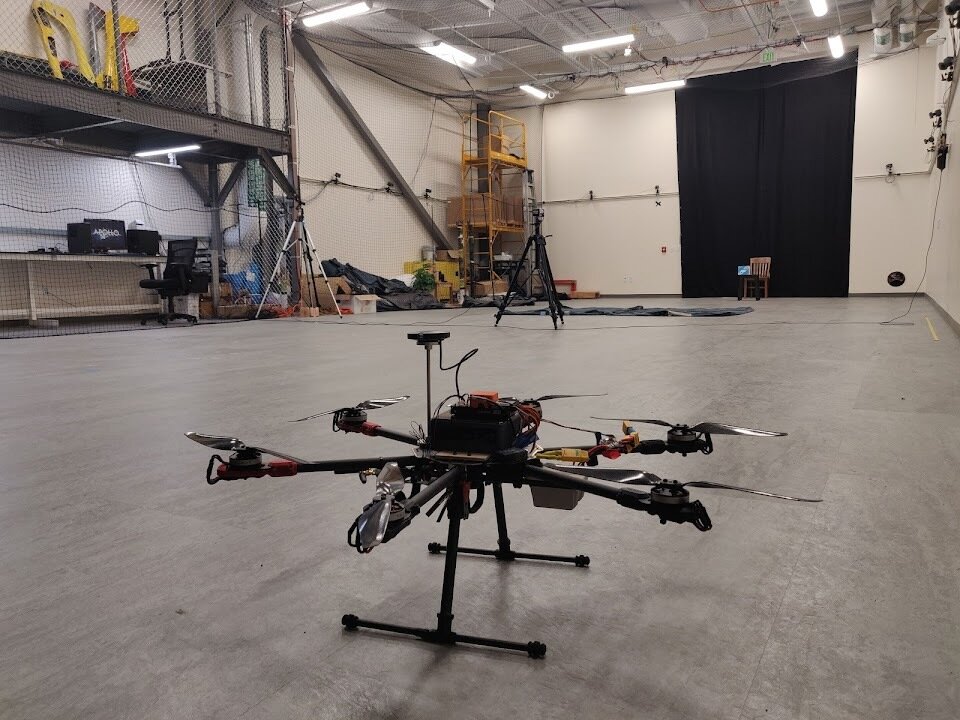
- Autonomous Aerial Scientific Missions
- Search and Rescue
- Space Exploration
- Ecology
-
Open Source Software
- POMDPs.jl Julia ecosystem

PI: Prof. Zachary Sunberg

PhD Students








Postdoc

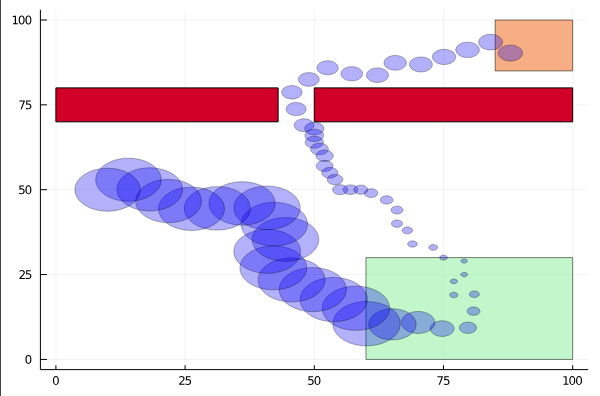
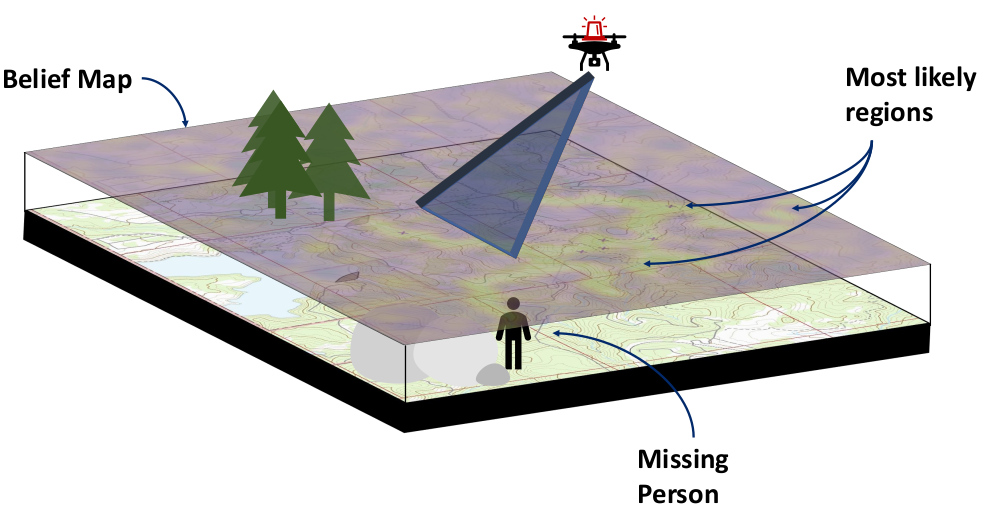



Most Significant Previous Contributions: Online POMDP Planning
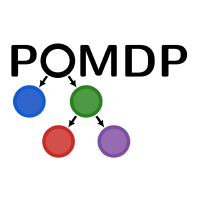
POMDP = Partially Observable Markov Decision Process
For DECODE-AI:
- Hidden POMDP states are the goals and intentions of the red team
- POMDP policies can accomplish blue team tasks and reveal red team intentions


\([x, y, z,\;\; \phi, \theta, \psi,\;\; u, v, w,\;\; p,q,r]\)
\(\mathcal{S} = \mathbb{R}^{12}\)
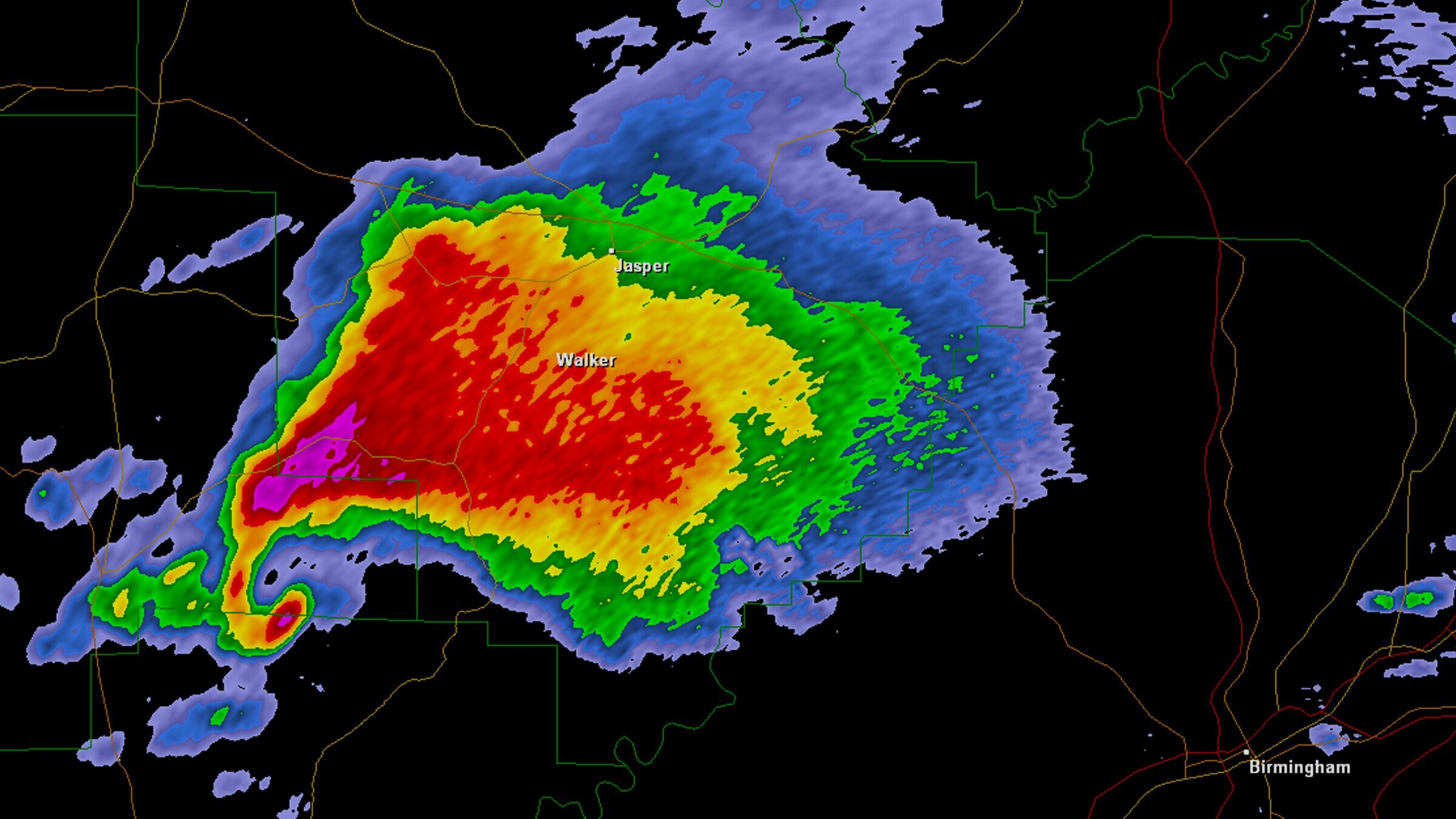
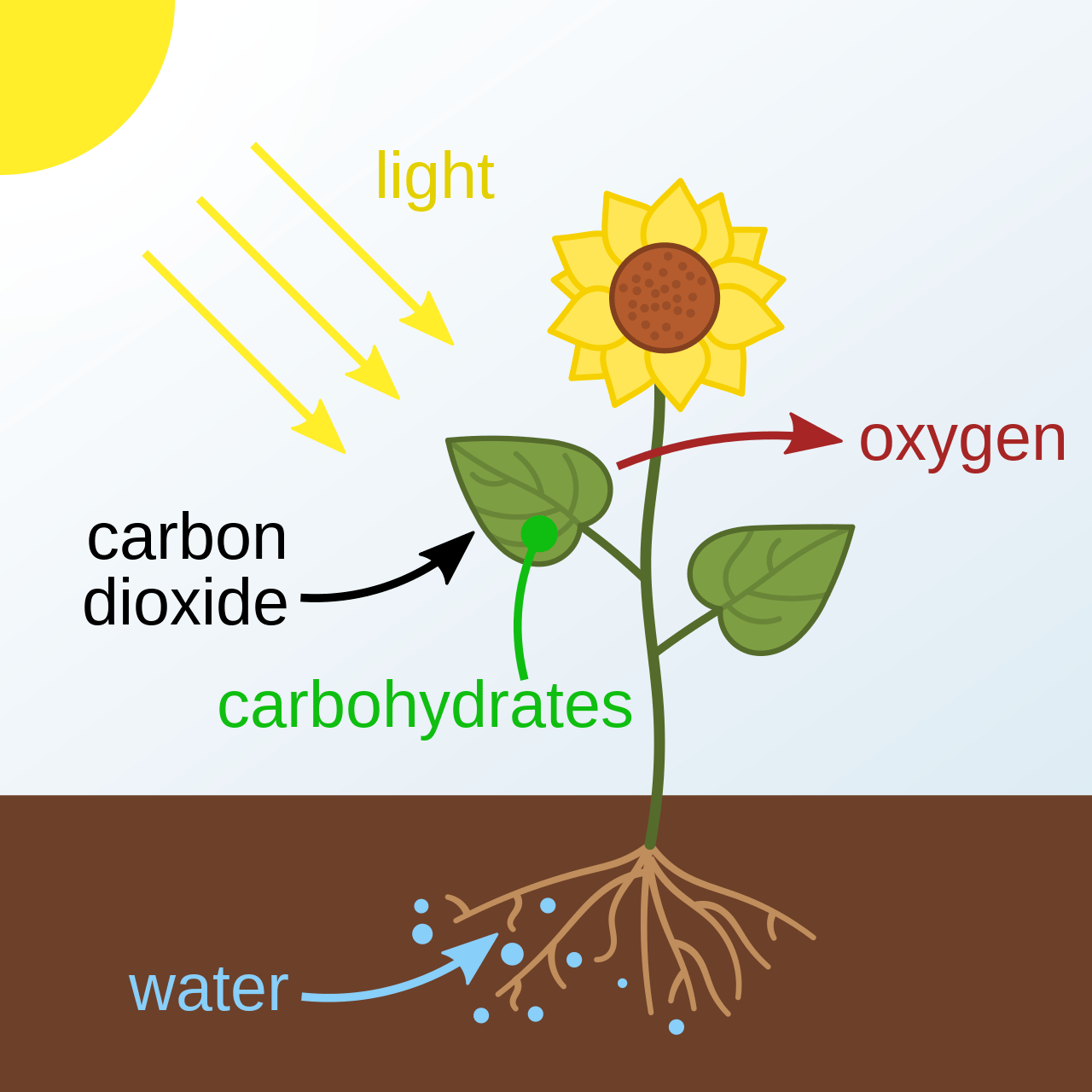
\(\mathcal{S} = \mathbb{R}^{12} \times \mathbb{R}^\infty\)
Very large continuous state and observation spaces
State Space:
Online: Computing as you are interacting (Kahneman Thinking Fast and Slow System 2)
Key Theoretical Breakthrough
- Solving POMDPs exactly is intractable (PSPACE-Complete / NP-hard) [Papadimitriou, 1987]
- However, our online algorithms can find \(\epsilon\)-suboptimal policies with no dependence on the size of the state or observation spaces.
[Lim, Becker, Kochenderfer, Tomlin, & Sunberg, JAIR 2023]
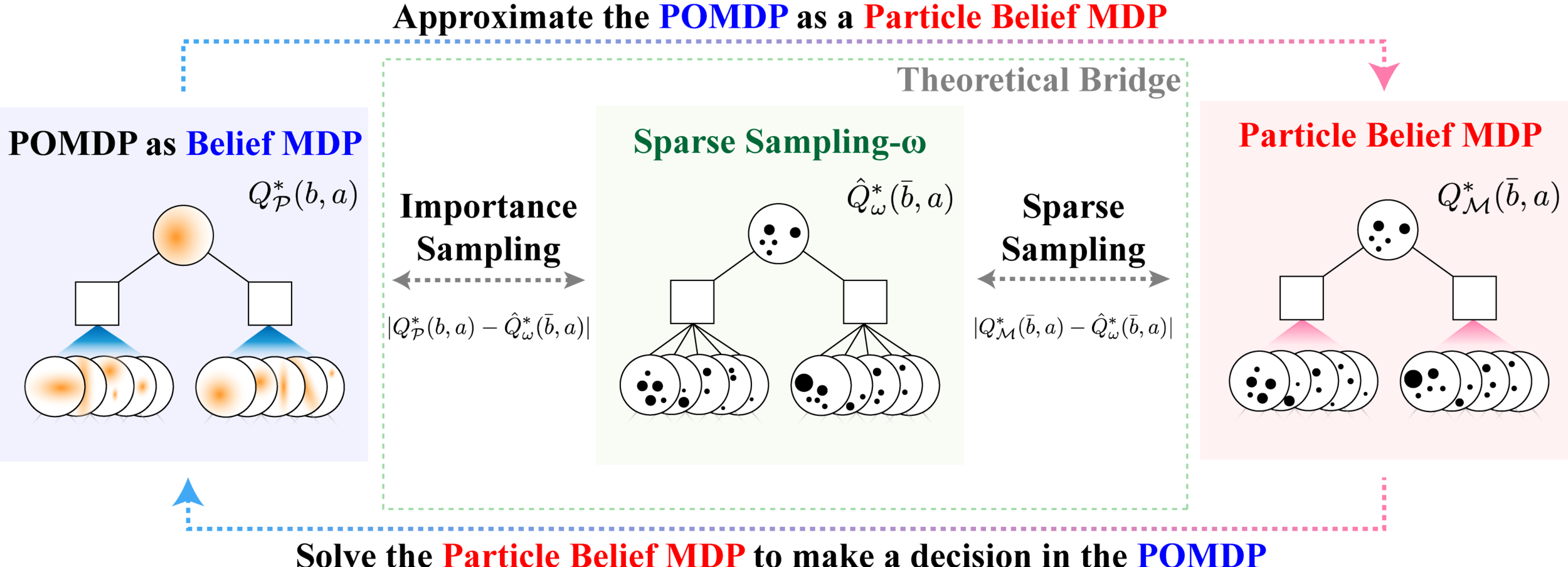
\[|Q_{\mathbf{P}}^*(b,a) - Q_{\mathbf{M}_{\mathbf{P}}}^*(\bar{b},a)| \leq \epsilon \quad \text{w.p. } 1-\delta\]
For any \(\epsilon>0\) and \(\delta>0\), if \(C\) (number of particles) is high enough,
No direct relationship between \(C\) and \(|\mathcal{S}|\) or \(|\mathcal{O}|\)
How Our POMDP Algorithms Work
1. Low-sample particle filtering
2. Sparse Sampling


[Lim, Becker, Kochenderfer, Tomlin, & Sunberg, JAIR 2023; Sunberg & Kochenderfer, ICAPS 2018; Others]
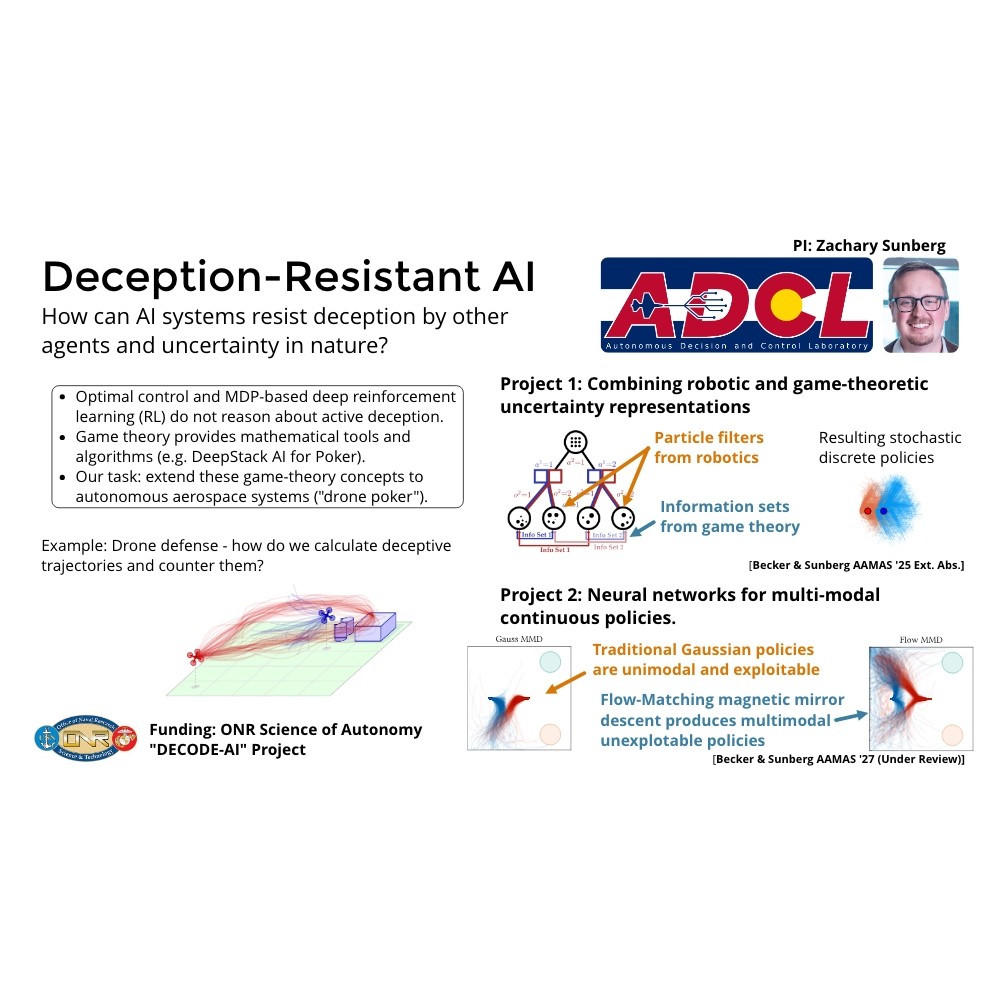
DECODE-AI Task 3.3:
Planning / ML Integration

- Our previous work showed promising performance (training time reduced by half)
- Only used mean and variance of particle distributions
[Deglurkar, Lim, Sunberg, & Tomlin, 2023]
Task 3.3 Goal: Use more than variance in learned components
Kahneman System 1
Kahneman System 2
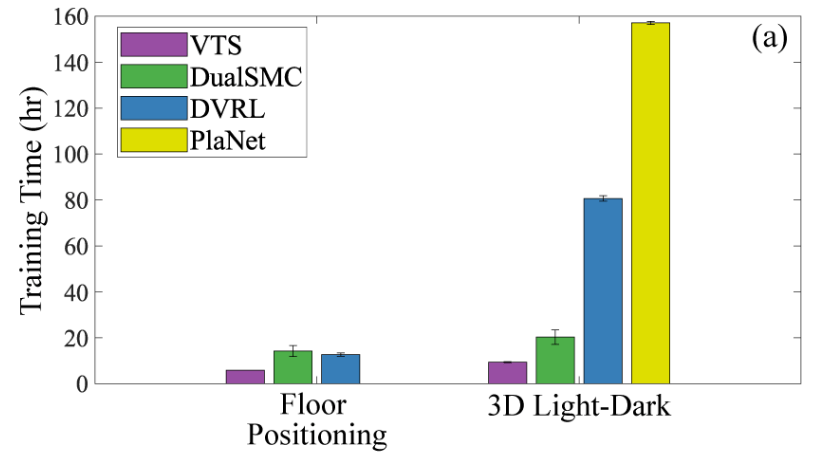
(Ours)

- Idea 1: Moment Generating Function
- Idea 2: Set Transformer
Progress so far:
- Basic implementations of MGF, Set Transformer
- Results comparable to baselines in simple problems
[Lee et al., ICML 2019]

[Ma et al., ICLR 2020]
DECODE-AI Task 3.3:
Planning / ML Integration


Query
Key
Value
Key Challenge: Interpreting particle beliefs in an order-invariant way
The POMDP is a good model for information gathering, but it is incomplete:
- Cannot reason about an adversary that can change their policy in response
- Cannot synthesize deceptive policies
Partially Observable Stochastic Game (POSG)
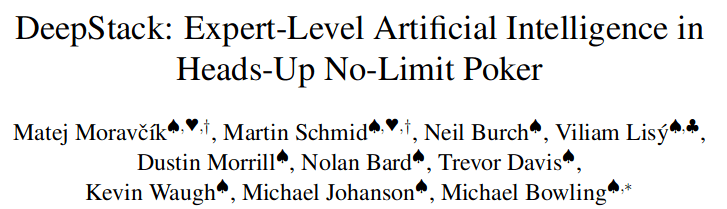
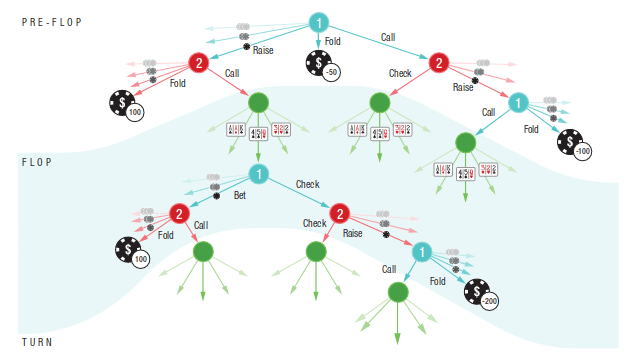
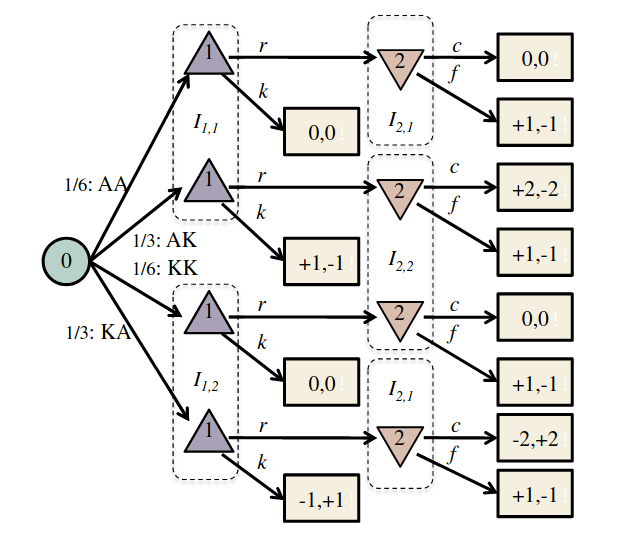
Image: Russel & Norvig, AI, a modern approach
P1: A
P1: K
P2: A
P2: A
P2: K
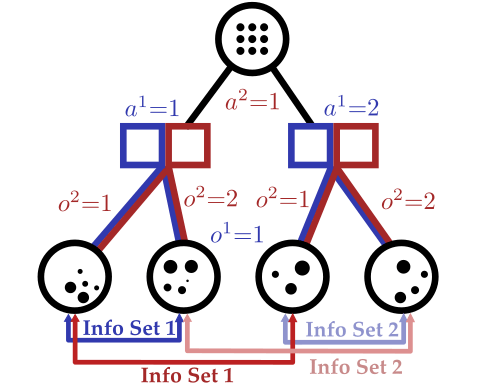
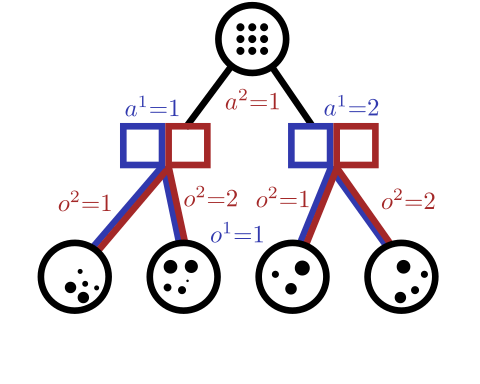
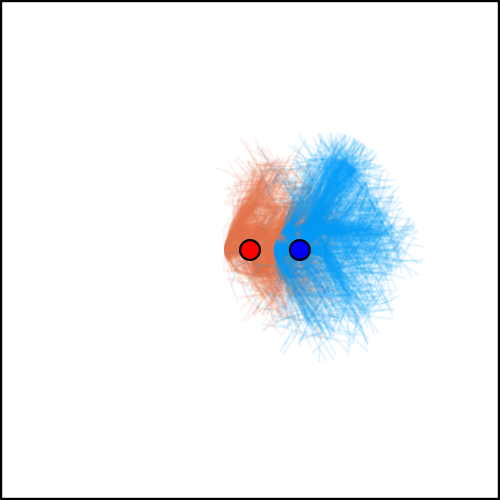
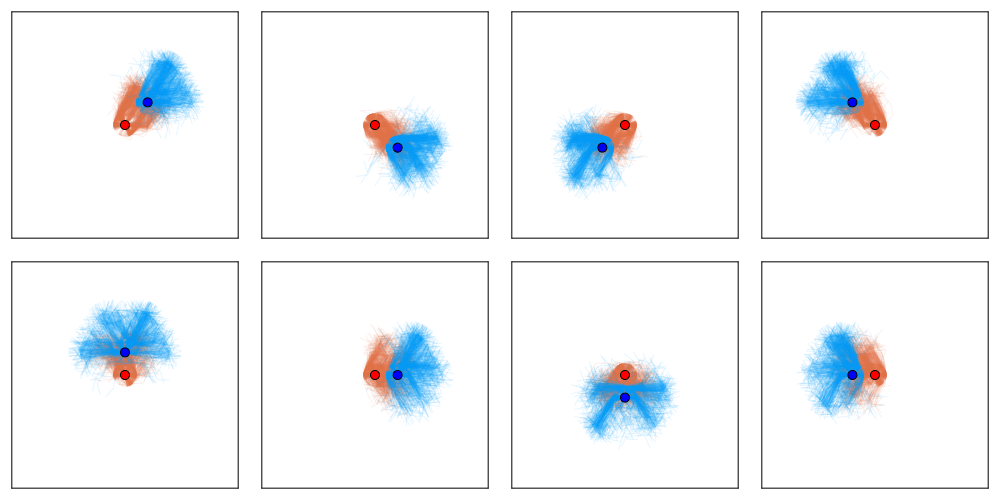
DECODE-AI Task 4.1: Online POSG Planning
Task 4.1 Goal: Create online POSG planning algorithms for real-world problems
[Becker & Sunberg, AAMAS 2025]
DECODE-AI Task 4.1: Online POSG Planning
Our approach: combine particle filtering and information sets
Joint Belief
Joint Action
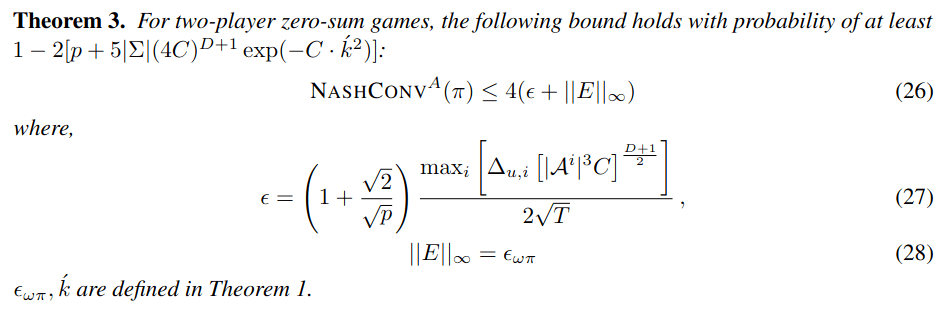
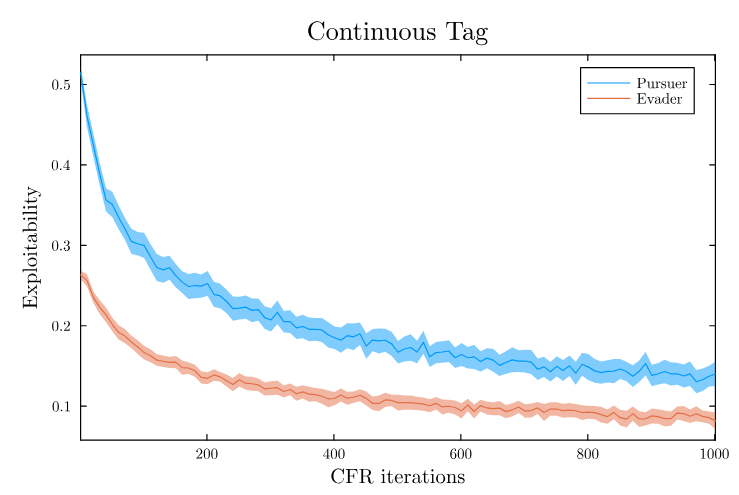
[Becker & Sunberg, AAMAS 2025]
Open (related) questions:
- Is this useful for continuous observations?
- What information needs to be carried step to step?
- Is this useful for games where both players know a partition of the state space exactly?
DECODE-AI Task 4.1: Online POSG Planning
Thank You!
Prof. Zachary Sunberg
PhD Student: Tyler Becker
PhD Student: Himanshu Gupta
PhD Student: Jackson Wagner
DECODE-AI Task 3.3: Integrating online POMDP planning with learned components
DECODE-AI Task 4.1: Online planning in POSGs
DECODE-AI Kickoff
By Zachary Sunberg