
What else am I doing?
Adversarial Policies in POMDPs
Professor Zachary Sunberg
University of Colorado Boulder
CAAMS Winter '25 IAB Meeting
Autonomous Decision and Control Laboratory

-
Algorithmic Contributions
- Scalable algorithms for partially observable Markov decision processes (POMDPs)
- Motion planning with safety guarantees
- Game theoretic algorithms
-
Theoretical Contributions
- Particle POMDP approximation bounds
-
Applications
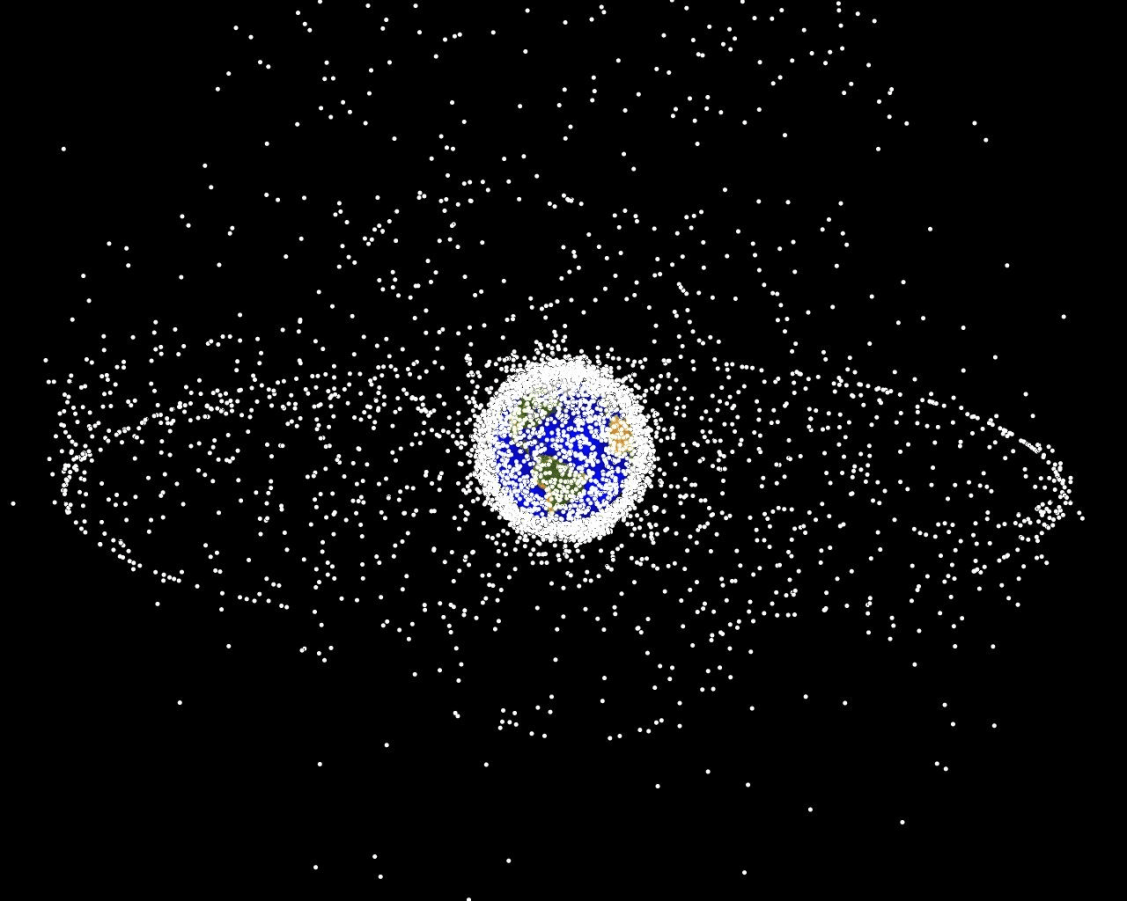
- Space Domain Awareness
- Autonomous Driving
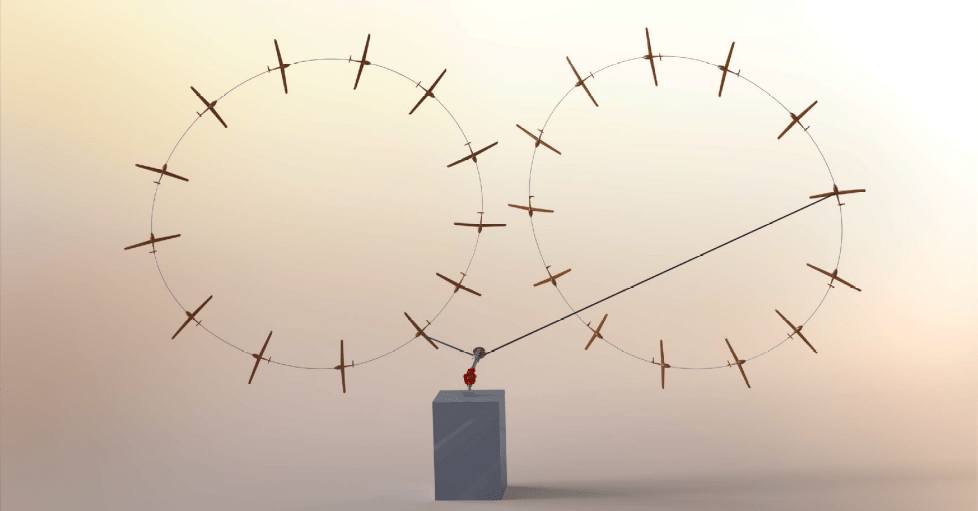
- Autonomous Aerial Scientific Missions
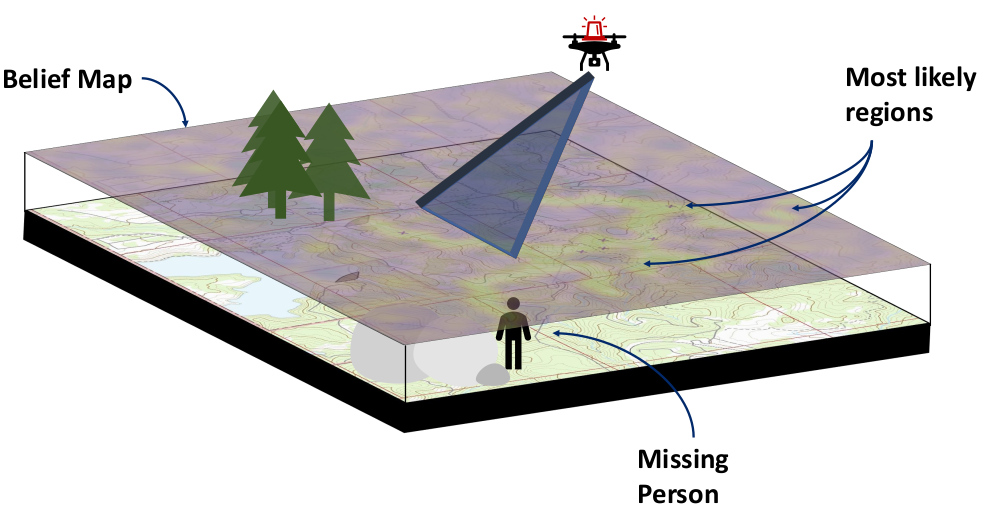
- Search and Rescue
- Space Exploration
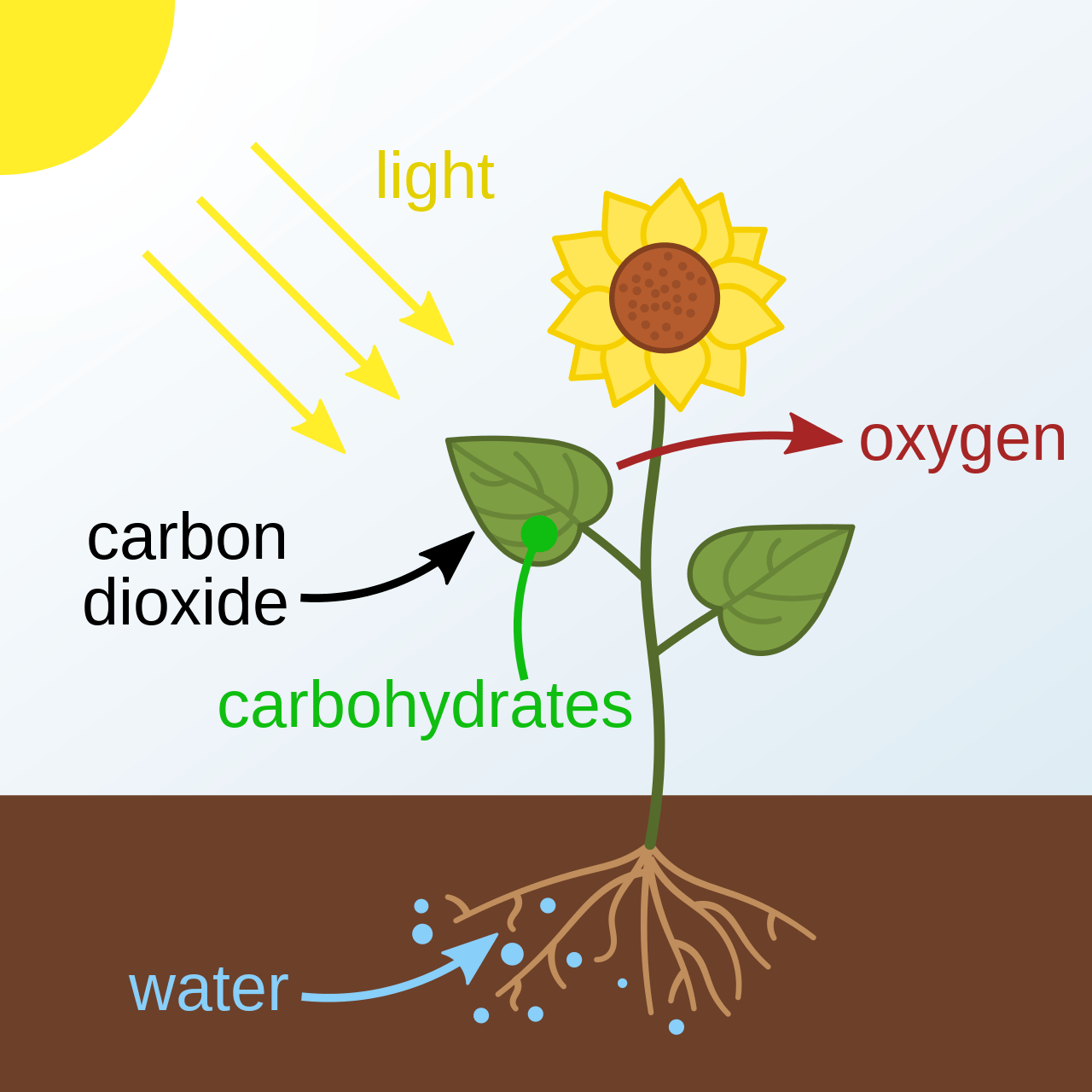
- Ecology
-
Open Source Software
- POMDPs.jl Julia ecosystem

PI: Prof. Zachary Sunberg

PhD Students







Postdoc

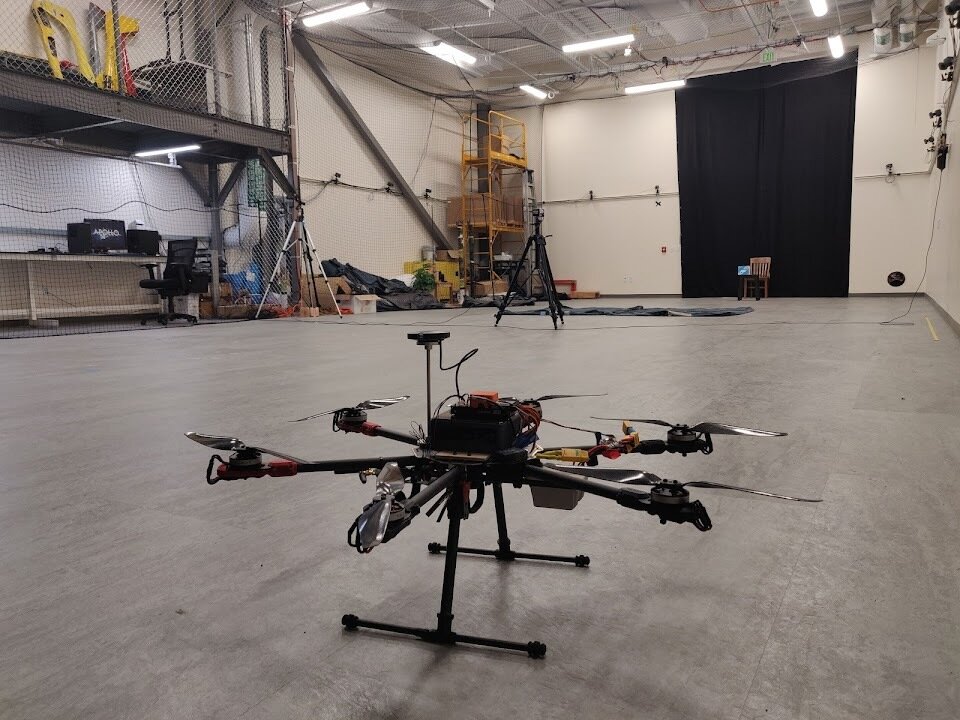


Markov Decision Process (MDP)
- \(\mathcal{S}\) - State space
- \(T(s' \mid s, a)\) - Transition probability distribution
- \(\mathcal{A}\) - Action space
- \(R(s, a)\) - Reward

Aleatory
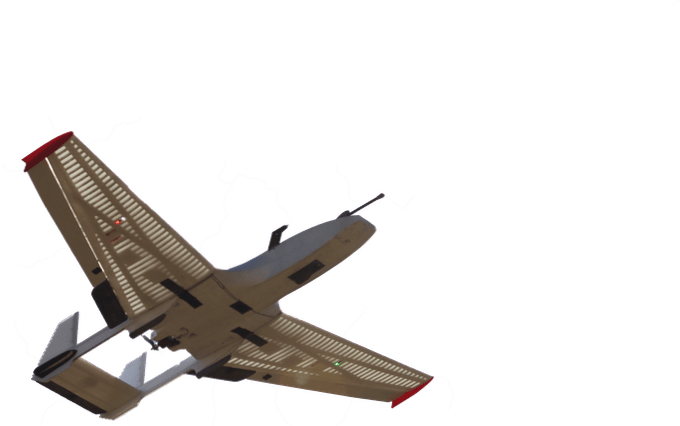
\([x, y, z,\;\; \phi, \theta, \psi,\;\; u, v, w,\;\; p,q,r]\)
\(\mathcal{S} = \mathbb{R}^{12}\)
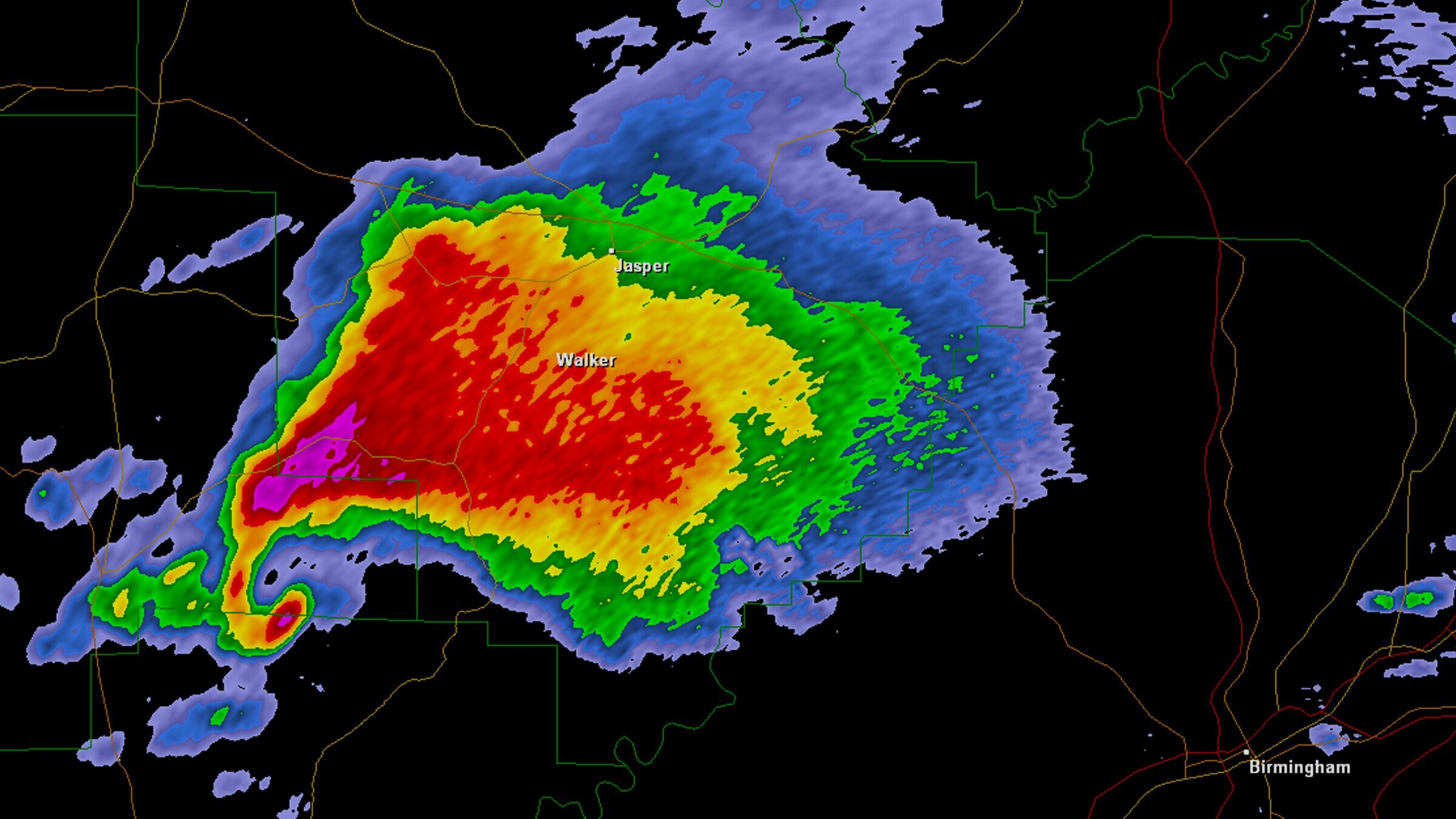
\(\mathcal{S} = \mathbb{R}^{12} \times \mathbb{R}^\infty\)
\[\underset{\pi:\, \mathcal{S} \to \mathcal{A}}{\text{maximize}} \quad \text{E}\left[ \sum_{t=0}^\infty R(s_t, a_t) \right]\]
Partially Observable Markov Decision Process (POMDP)

- \(\mathcal{S}\) - State space
- \(T(s' \mid s, a)\) - Transition probability distribution
- \(\mathcal{A}\) - Action space
- \(R(s, a)\) - Reward
- \(\mathcal{O}\) - Observation space
- \(Z(o \mid a, s')\) - Observation probability distribution
Aleatory
Epistemic (Static)
Epistemic (Dynamic)
\([x, y, z,\;\; \phi, \theta, \psi,\;\; u, v, w,\;\; p,q,r]\)
\(\mathcal{S} = \mathbb{R}^{12}\)
\(\mathcal{S} = \mathbb{R}^{12} \times \mathbb{R}^\infty\)
Examples of POMDPs


Solving a POMDP
Environment
Belief Updater
Planner
\(a = +10\)

\(b\)
\[b_t(s) = P\left(s_t = s \mid b_0, a_0, o_1 \ldots a_{t-1}, o_{t}\right)\]

\[ = P\left(s_t = s \mid b_{t-1}, a_{t-1}, o_{t}\right)\]
\(Q(b, a)\)
True State
\(s = 7\)
Observation \(o = -0.21\)
Key Theoretical Breakthrough
- Solving POMDPs exactly is intractable (PSPACE-Complete / NP-hard) [Papadimitriou, 1987]
- However, our online algorithms can find \(\epsilon\)-suboptimal policies with no dependence on the size of the state or observation spaces.
[Lim, Becker, Kochenderfer, Tomlin, & Sunberg, JAIR 2023]
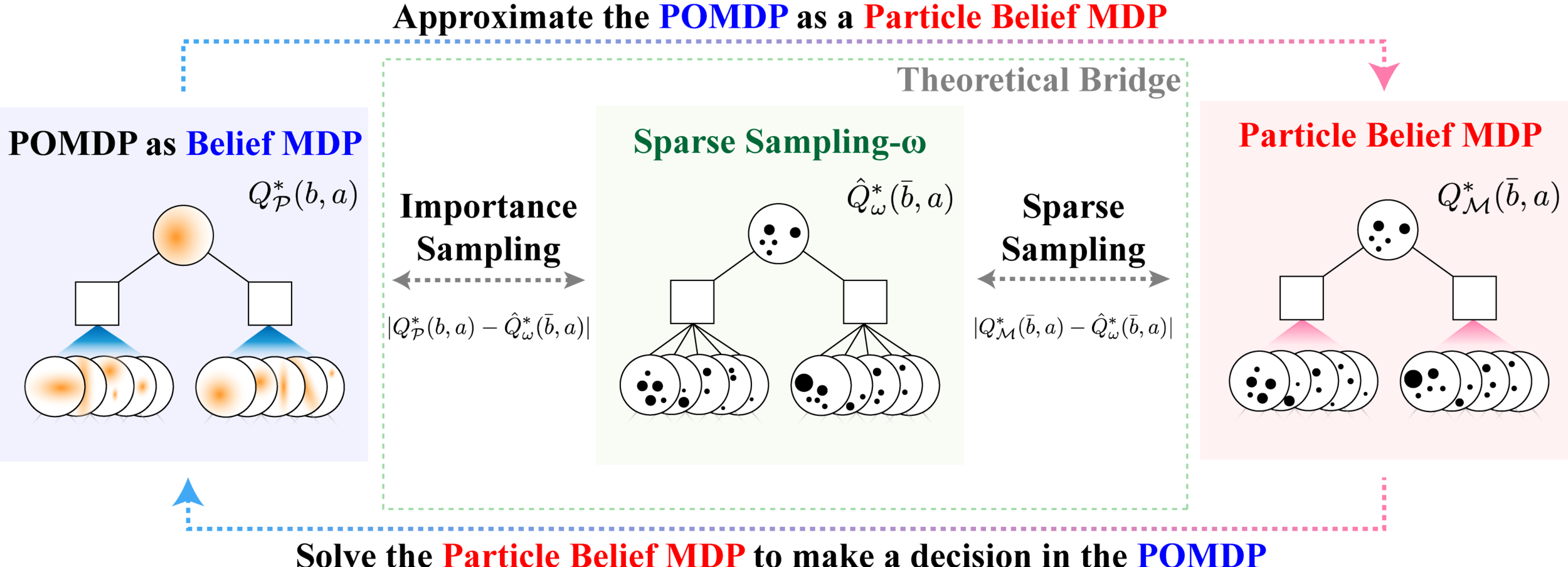
\[|Q_{\mathbf{P}}^*(b,a) - Q_{\mathbf{M}_{\mathbf{P}}}^*(\bar{b},a)| \leq \epsilon \quad \text{w.p. } 1-\delta\]
For any \(\epsilon>0\) and \(\delta>0\), if \(C\) (number of particles) is high enough,
No direct relationship between \(C\) and \(|\mathcal{S}|\) or \(|\mathcal{O}|\)

Adversarial Policies in POMDPs
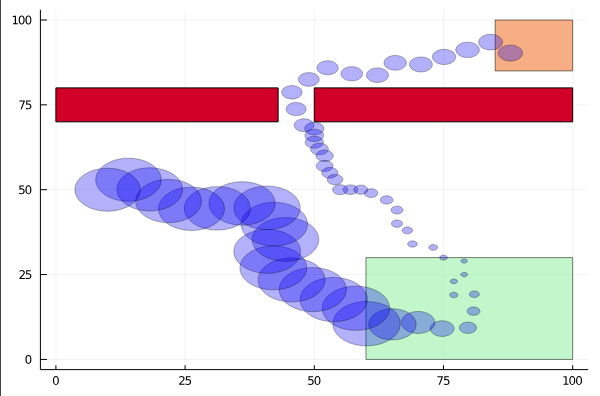
What is the worst case probabilistic model for the orange evader?

This cannot be calculated by solving a (PO)MDP!
(Every (PO)MDP has an optimal deterministic policy)
The POMDP is a good model for information gathering, but it is incomplete:
- Cannot reason about an adversary that can change their policy in response
- Cannot synthesize deceptive stochastic policies
Partially Observable Stochastic Game (POSG)
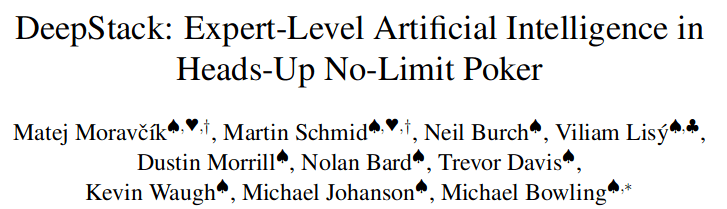
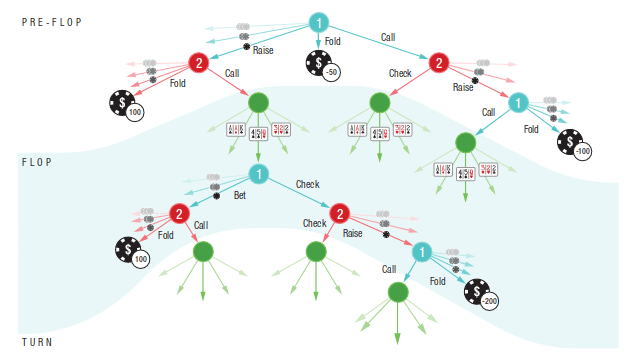
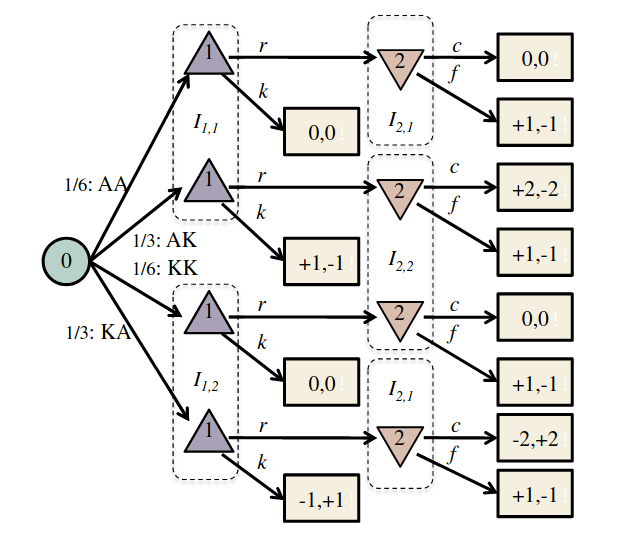
Image: Russel & Norvig, AI, a modern approach
P1: A
P1: K
P2: A
P2: A
P2: K
Planning in POSGs
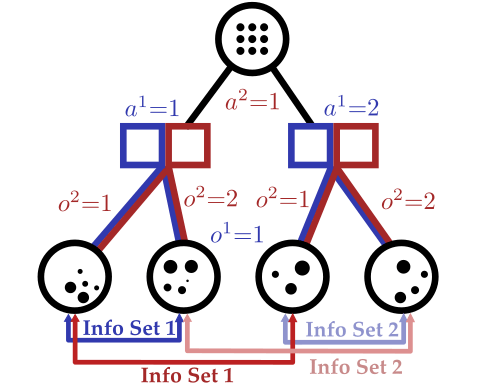
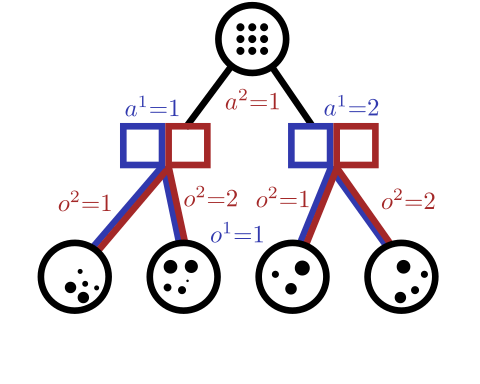
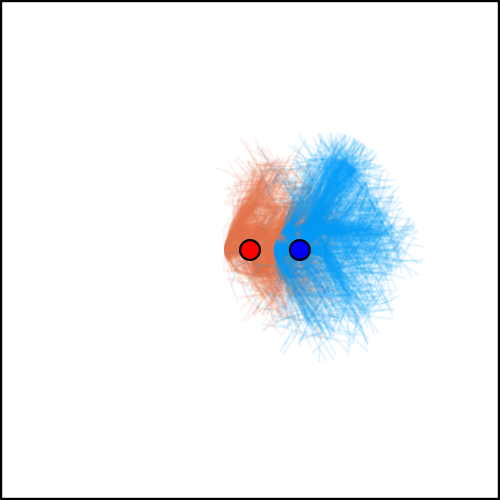
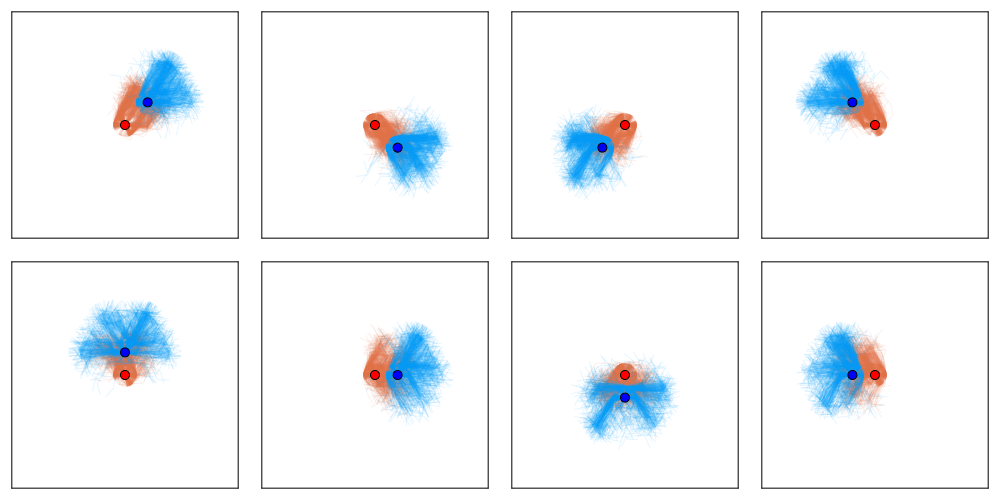
[Becker & Sunberg, AAMAS 2025]
Planning in POSGs
Our approach: combine particle filtering and information sets
Joint Belief
Joint Action
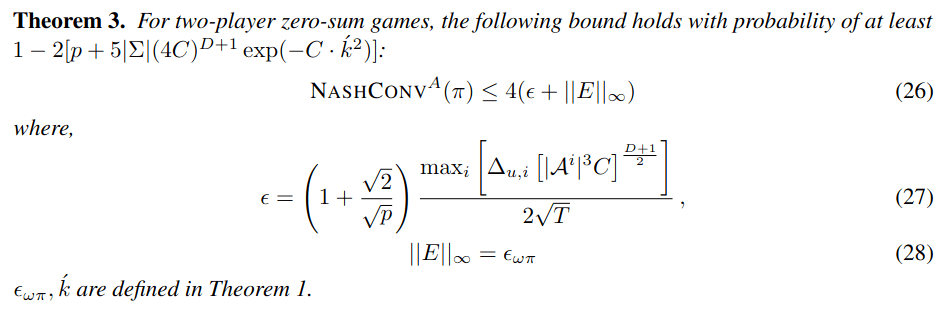
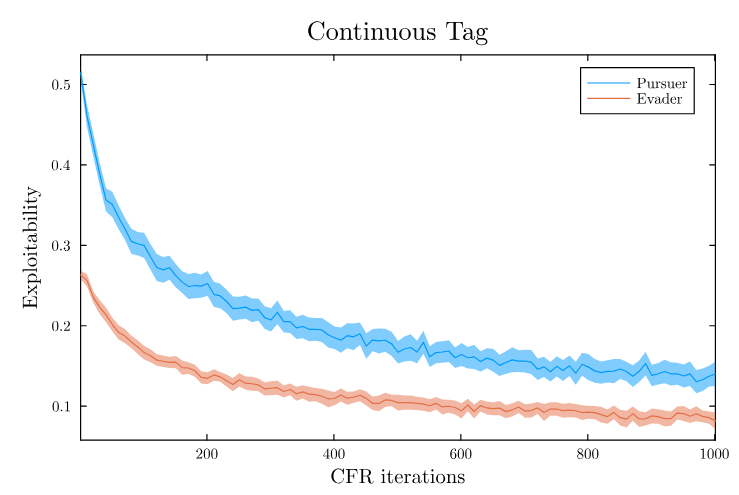
[Becker & Sunberg, AAMAS 2025]
Open (related) questions:
- Is this useful for continuous observations?
- What information needs to be carried step to step?
- Is this useful for games where both players know a partition of the state space exactly?
Planning in POSGs
Autonomous Decision and Control Laboratory
-
Algorithmic Contributions
- Scalable algorithms for partially observable Markov decision processes (POMDPs)
- Motion planning with safety guarantees
- Game theoretic algorithms
-
Theoretical Contributions
- Particle POMDP approximation bounds
-
Applications
- Space Domain Awareness
- Autonomous Driving
- Autonomous Aerial Scientific Missions
- Search and Rescue
- Space Exploration
- Ecology
-
Open Source Software
- POMDPs.jl Julia ecosystem
PI: Prof. Zachary Sunberg
PhD Students
Postdoc